Why are we stuck in a rut?

ARE human beings – and human life itself – fundamentally good or bad? It is a question that has taxed philosophers for millennia. In one of its most recent manifestations it is represented on the one hand by Thomas Hobbes who regarded life before civilisation as being ‘nasty, brutish and short’, which we could only escape by surrendering our freedom to a supreme leader – a leviathan, which happens to give its name to his magnum opus. On the other hand we have Jean Jacques Rousseau who argued the complete opposite – that the innocence of humanity was corrupted by civilization.

According to Hobbes, life is naturally ‘nasty, brutish and short’.

But what if the very idea of whether humans are good or bad is a category error? That is the claim made by the late David Graeber and David Wengrow in The Dawn of Everything – A New History of Humanity. They point out that the terms ‘good’ and ‘bad’ are purely human concepts. No one would claim that a non-human animal or a plant was good of bad. “It follows that arguing about whether humans are good or evil makes as much sense as arguing about whether humans are fundamentally fat or thin,” they write. In fact, their research shows that human society before the Agricultural and Industrial Revolutions was neither brutish not idyllic. They claim, on the contrary, that the ‘world of hunter gatherers as it existed before the coming of agriculture was one of bold social experiment, resembling a carnival parade of political forms’. Further: “And far from setting class difference in stone, a surprising number of the world’s earliest cities were organized on robustly egalitarian lines, with no need for authoritarian rulers, ambitious warriors – politicians, or even bossy administrators.”

From their research, the authors have found that neither Hobbes nor Rousseau were right. There was no single pattern. “The only consistent phenomenon is the very fact of alteration, and the consequent awareness of different social possibilities,” they write. So, when we ask what the origins of social inequality were, we are asking the wrong question. “If human beings, through most of our history, have moved back and forth between different social arrangements, assembling and disassembling hierarchies on a regular basis, may be the real question should be ‘how did we get stuck?’ How did we end up in a single mode?” That mode, they argue is eminence and subservience – once seen as temporary expedients or even grand theatre – now embedded as ‘inescapable elements of the human condition’.

How did we get stuck in a rut?

The key for David Graeber and David Wengrow is not that inequality has its roots in pre-civilization society and is now an inevitably permanent feature of human society. It is not that we have lost a kind of innocence as in the Christian myth of Original Sin. What we have lost is the ability to even envisage different social and economic orders. They write: “The contrast with our present situation could not be more stark. Nowadays, most of us find it increasingly difficult to even to picture what an alternative economic or social order might be like. Our distant ancestors seem, by contrast, to have moved regularly back and forth between them.”

If we are to break the mould of class division and economic inequality the, the authors say, we must rediscover three freedoms – and not just the negative freedom like freedom of speech. They are: 1 – the freedom to move or relocate from one’s surroundings; 2 – the freedom to shape entirely new social realities, or shift back and forth between different ones; 3 – the freedom to ignore or disobey commands issued by others. Another overarching freedom which enables these three is the positive freedom which empowers people to act and not to be merely passive recipients. So, for example, while we have the negative freedom to relocate, the ability to actually do so depends on whether or not you have the required social and economic security. It means developing the idea of active citizenship – to be citizens rather than just ‘consumers’, ‘constituents’, taxpayers’ or ‘subjects’. (This will be the subject of a future blog).
Above all we need to recognise that civilization and complexity need not come at the price of human freedom, that participatory democracy – maybe in the form of citizens’ assemblies – is not necessarily possible only in small groups but impossible to scale up to city or national level. We need to rediscover our ability to imagine alternatives and to consign to the dustbin of history the toxic phrase ‘there is no alternative’.
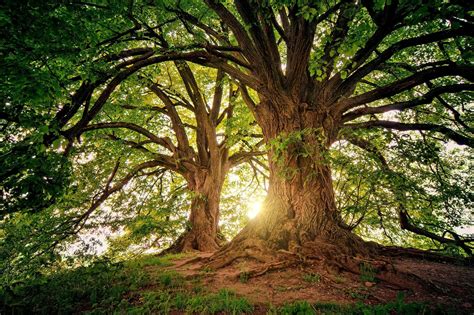
Do trees have brains?

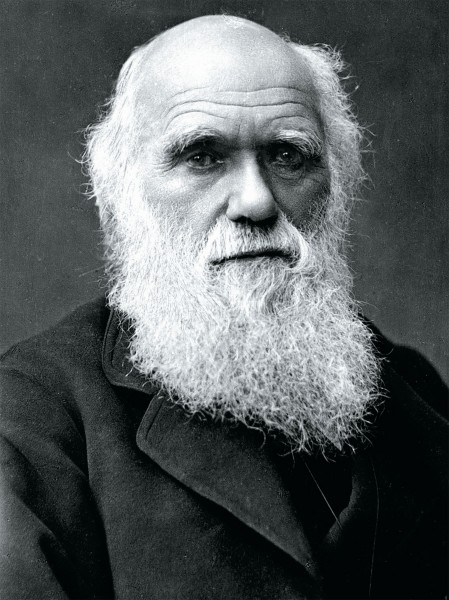
“THUS, from the war of nature, from famine and death, the most exalted object which we are capable of conceiving, namely, the production of the higher animals, directly follows.” So wrote Charles Darwin in the last paragraph of On the Origin of Species. The sense one gets is that all species below the ‘higher animals’ are in some inferior products of evolution by natural selection. But is there more to the lower forms of life, even to plant life than this? Well, according to Peter Wohlleben in The Hidden Life of TREES, there most certainly is.

Charles Darwin

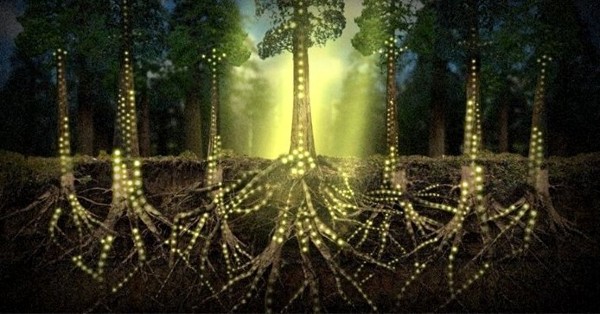
Indeed, the titles of his chapters tell their own stories. Titles like ‘Friendships’, ‘The Language of Trees’ and ‘Social Society’ sound more like a sociological thesis than a book on trees. Writing about the culture of trees, he writes: “It appears that nutrient exchange and helping neighbours in times of need is the rule, and this leads to the conclusion that forests are super organisms with interconnection much like ant colonies.” Not only that, trees are able to recognise their own roots from those of others and ‘even from the roots of related individuals’. On the other hand, the delinquents of the tree world are planted coniferous forests, which cannot network with each other because their ‘roots are irreparably damaged when they are planted’.

When Wohlleben started writing the book he managed the forest in the Eifel mountains in Germany and it began to change his experience of the forest. “When you know that trees experience pain and have memories and that tree parents live together with their children, then you can no longer just chop them down and disrupt their lives.”

We believe that language can only take place via human and some other ‘higher’ species using words, symbols or signs. However, there are different ways of communicating and trees in particular communicate using scent. For example, it was noticed in the African savannah that acacia trees can give off a warning gas to signal to others that they are under attack.

Acacias

Beeches, spruce and oaks ‘all register pain as soon as some creature starts nibbling them.’ In fact, writes Wohlleben, trees communicate through smell, vision and electrical impulses. And if trees can demonstrate something akin to friendship, then it seems that they also have something resembling a social security system. In undisturbed beech forests, trees share resources by synchronising their photosynthesis levels so that they are all ‘equally successful’. “The trees, it seems, are equalizing differences between the strong and the weak.”, writes Wohlleben.

Now, perhaps the most controversial claim made by Wohlleben is his contention that trees have brains. He argues that since studies show that trees can learn, they must be able to store their knowledge. Nevertheless, the idea that trees have a brain may sound to some like a bit of a stretch. Wohlleben writes: “For there to be something we would recognise as a brain, neurobiological processes must be involved, and for these, in addition to chemical messages, you need electrical impulses.

Do trees communicate through electrical impulses?

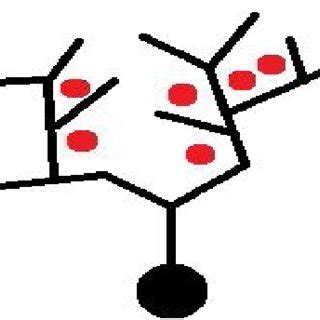
“And these are precisely what we can measure in trees, and we’ve been able to do so since as far back as the nineteenth century.” Brain-like structures can be identified at root tips, and a powerful analogy can be found in the use of the word ‘dendron’ (from the Greek meaning ‘tree’) for certain processes in the human brain.

An interesting question is whether all of this has any resonance with the concept of human consciousness. Of course, we have to be cautious here because it has not yet been established whether or not trees do actually have a brain. But we can get round that by using the conditional if/then. So, we can say, if trees have brains, then does that help in our understanding of consciousness?

A schematic portrayal of dendrons.

Well, one of the markers of consciousness is intensionality or aboutness. That is, for an organism to have consciousness it must be able to be aware of stuff outside of itself. One of the claims by those who are opposed to the idea that the material brain has consciousness is that intensionality has no place in pure matter. But if organisms like trees can be said to have inensionality, then this strut of the anti-materialists is knocked away. This is not the end of the matter, however, because there more struts for the anti-materialists to cling to.

Covid v Neoliberalism

IT has become increasingly obvious that when Covid hit in early 2020 the UK was disastrously unprepared. It was the most pervasive pandemic since the Spanish Flu after the World War I. But it was the political decisions over the last 30 years, which, ironically, were hell bent on eliminating political decision-making, that exacerbated the impact.

The Covid virus

The aim since the 1980s has been to reduce political decision-making on the assumption that the so-called ‘free economy’ and the much-vaunted rational choice theory, which at the heart of neoliberalism, knows best. However, Covid exposed this theory as being hopelessly inadequate.

As Adam Tooze writes in Shutdown – How Covid Shook the World Economy, Covid required a ‘willingness to contend with political choices, choices about resource distribution and priorities at every level’. And he adds: “That ran up against the prevailing desire of the last forty years to avoid precisely that, to depoliticize, to use markets…to avoid such decisions. This is the basic thrust behind what is known as neoliberalism, or the market revolution – to depoliticize distribution issues, including the very unequal consequences of societal risks, whether those be to structural change in the global division of labour, environmental damage, or disease.” It should be said here that New Labour did do a lot to reverse the damage done to public bodies like the NHS and to reduce poverty, especially among the young, with policies like the minimum wage, Sure Start, and child poverty reduction programmes. But, arguably, is still supported the basic premises of neoliberalism and thought it could ride the tiger to reduce its worst effects – until the tiger bit back of course.

Getting back to the days in the run-up to Covid, however, for the briefest of moments it looked as though things were about to change, that inequality and the globalized lifestyles of the richest of the rich cliques was about to be challenged.

This new challenge was epitomized by that part of the Left Wing on both sides of the Atlantic fired up by Jermey Corbyn and Bernie Sanders. But, as Tooze writes: “The promise of a radicalized and re-energised left, organized around the idea of the Green New Deal, seemed to dissipate amid the pandemic.” And one might add, in the UK Brexit. One should also point out here that the Corbyn venture failed before the pandemic happened. There was, however, a bitter irony in all of this: “Even as the advocates of the Green New Deal went down to political defeat, 2020 resoundingly confirmed the realism of their approach.” The response to Covid was massive fiscal life support even bigger than in 2008 after the financial meltdown, thus confirming the ‘essential insights of economic doctrines advocated by radical Keynesians and made newly fashionable by Modern Monetary Theory (MMT). State finances are not limited like those of a household. As Keynes himself wrote: “Anything we can actually do we can afford.” And the actual history of so-called small state neoliberalism has been a ‘series of state interventions in the interests of capital accumulation’.

Covid also demonstrated just how dependant the economy is on the stability of nature. Tooze writes: “A tiny virus mutation in a microbe could threaten the entire world economy.” And it tore down the partitions neoliberalism had erected dividing the ‘economy from nature, economics from social policy and from politics per se’. According to him the pandemic exposed the ‘illusion that there is a thing called the economy that is separate from society’. And when government intervened the markets recovered remarkably well – but the recovery was unequal. “Worldwide, the wealth of the billionaires rose by $1.9 trillion in 2020, with $560 billion of that benefiting America’s wealthiest people. Among the surreal and jarring juxtapositions of 2020, the disconnect between high finance and the day-to-day struggles of billions of people around the world stood out.”, writes Tooze.
Tooze does not provide a solution to the problem except to say that we must shift our worldview in order to be ready to meet the challenges that face us now and may face us in the future. He writes: “If 2020 taught us anything it is how ready we must be to revise our worldview. The Green New Deal was brilliantly on point, but it imagined climate as the most urgent threat to the Anthropocene. It too was overrun by the pandemic’. He recommends a kind of open mindedness ‘commensurate with the times we live in’.

We need to change our worldview

It has to be said that this is a pretty thin response to the problem we face today. Sure, openness is an important quality in an increasingly splintered and polarized world. But to say that the Green New Deal was overrun by the pandemic, is not to say that it was wrong. We need something like the Green New Deal that was offered by the radical left in the run up to Covid. The mealy-mouthed lip-service that the candidates gave to the climate change during the Conservative Party’s unedifying leadership contest and the economic disaster that has ensued since, just won’t do. And it is worrying that the invasion of by Russia of Ukraine is being used to justify the status quo in the West.

Defending the status quo!

If we are going to save Homo Sapiens and other animals, then we need to turn apathetic citizens, who look on the Westminster cliques as mere spectators, into active participants. And one way to do that is to introduce citizens’ assemblies at every level of society – from parish councils to a new People’s Assembly to replace the House of Lords.

The dark theatre of the mind

WE intuitively believe that what we see is what there is. Despite philosophers like Kant and Schopenhauer telling us that it is actually the brain that determines how we experience the phenomenal world, it has never felt right; it still doesn’t. But how does the brain find out about the world, trapped as it is inside the dark theatre of the skull. As neuroscientist David Eagleman writes in The Brain ‘the brain has no access to the world outside’. He adds: “Sealed within the dark, silent chamber of your skull, your brain has never never directly experienced the external world, and it never will.”

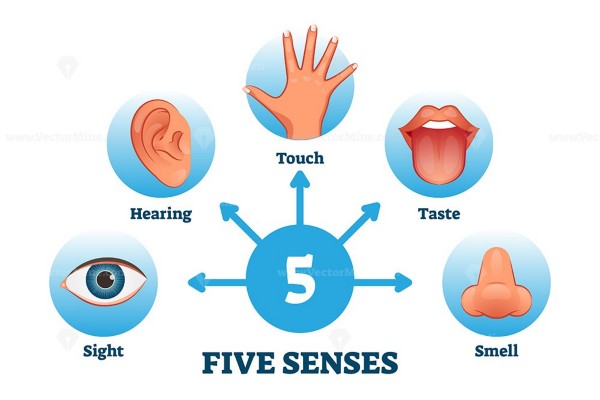
So the brain relies on sensory organs to pick up information carried by photons, air waves, molecules, texture, and temperature, which it then turns into electrochemical signals. These in turn pass through networks of neurons. Eagleman writes: “There are a hundred billion neurons in the human brain, and each neuron sends tens or hundreds of electrical pulses to thousands of other neurons every second of your life. Everything you experience – every sight, sound, smell – rather than being a direct experience – is an electrochemical rendition in a dark theatre.” Even for those of us who are familiar with this sort of research, it remains mindboggling.

Experiencing the world as we do feels effortless. But it’s not. The brain has to put in an enormous amount of effort every second of our waking day just to see. And that’s not all, it then has to synchronize all the other senses, all of which it processes as different speeds. For example, light has to go through a more complicated process than auditory signals, which is why sprinters react quicker to the sound of a gun than to a light signal. And yet all these different processing speeds are gathered together to make it seem as though they are happening at the same time. This is because your ‘brain collects up all the information from the senses before it it decides upon a story of what happens’. And before any of this happens the brain guesses what’s out there and then adjusts its internal model depending on the extent to which its expectations are met. It is, in effect, a Bayesian inference machine.

But how does all this translate into the hard problem of consciousness? How does matter become intentional? For Eagleman the answer is that consciousness is an emergent property. Now we are entering choppy waters. Not everybody is on board when it comes to emergent properties, which essentially purports to explain how consciousness emerges from a sufficiently complex nervous system. Prof Raymond Tallis, writing in Philosophy Now, for example, is unimpressed: “It is, however, becoming increasingly obvious that ’emergence’ doesn’t reduce the problem of life, even less the puzzle of conscious intelligent life. Emergence looks more like a description than an explanation.”

However, Prof Tallis does not explore further work by Prof Giulio Tononi of the University of Wisconsin, who goes beyond the emergent property model to suggest, from his studies of people while asleep and awake, that consciousness requires a perfect balance between what he calls differentiation – that is enough complexity to represent different states – and integration, which requires ‘enough connectivity to have distant parts of the network in tight communication with one another’. Eagleman comments: “In this framework, the balance of differentiation and integration can be quantified, and he proposes that only systems in the right range experience consciousness.” Prof Tallis might respond by saying that this is a just a more detailed description rather than an explanation. But is there not a point at which a description becomes so detailed that it flips into becoming an explanation? Do at least some scientific discoveries start as descriptions but in doing so are also explanations or at least involve explanation? Christian Baden writes: “The conditions and rules sustaining the explanation can themselves be described and explained, resulting in substantial overlap between description and explanation.” And maybe the balance between differentiation and integration provides the explanation of the description provided by emergence theory.

Underlying Prof Tallis’s objection to emergence theory is his resistance to the idea that the mind can be described and explained in purely materialistic terms. At present there appears to no knock-down argument for materialistic or non-materialistic explanations of the mind and consciousness. It’s true to say that materialists have got to provide definitive proof that consciousness is just a matter of matter. But that is not in itself proof that it is non-materialistic either, anymore than pointing out that science does not have, and may never have, all the answers about existence and the universe, or universes, is proof of the existence of a god. What is going for the materialist is Ockham’s Razor in that it does not require any further explanations, whereas non-materialism does.

False consciousness – or just plain contented?

ONE of the abiding rifts in left/right political philosophy is the approach towards the poorest members of society. The failure of socialism to overthrow capitalism perplexes those on the left of the political spectrum. For those on the right it’s simple: capitalism works, it delivers well-being for most people, so there is no reason to change it.

From their perspective, however, left-leaning, often middle-class intellectuals either come to despise the working class for their weakness or blame it on false consciousness created by the dominant ideology. By this reasoning the working classes have been duped by the ruling clique into supporting Conservatism rather than Socialism – in short they are like turkeys voting for Christmas.

As Nick Cohen wrote in What’s Left: “Margaret Thatcher and Ronald Reagan won repeatedly because large numbers of voters from the skilled working class supported them. They were never forgiven for that because from their different points of view Fabians, liberals and Marxists had hoped the working class would take power under their leadership. When it didn’t, they despised the working class for its weakness and treachery and condemned its members for their greed and obsession with celebrity.” That is quoted in a book by Christopher Snowden called The Spirit Level Delusion which looks to debunk the ideas of Wilkinson and Pickett in The Spirit Level, which purports to show that unequal societies have more social problems than more equal ones. This blog, however, is more concerned by the question of false consciousness and whether it has any explanatory power or is just wishful thinking by the left.

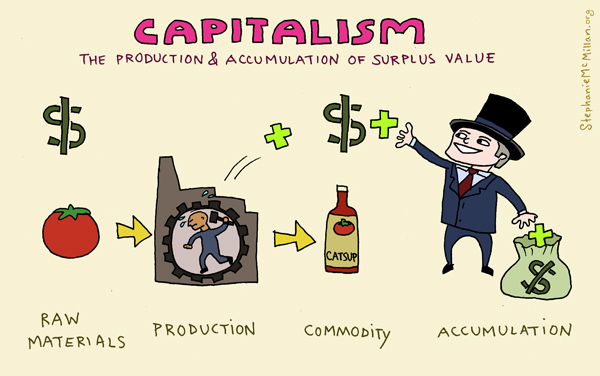
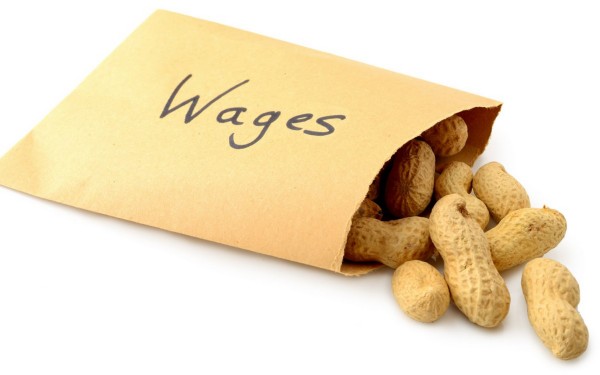
There is no doubt which side Snowden is on of course: “Working class indifference to inequality, so long as their own circumstances are improving, is seen as another example of false consciousness by those on the left politically.” But according to him it has nothing to do with false consciousness. He writes: “Decades of affluence, rising wages and home ownership, made the working class less reliant on paternal socialism and the labour movement.” However, in recent years that does not explain why with stagnant and reducing wages in real terms, particularly in the public sector, underpinned by austerity and the hollowing out of the public sphere, there is still no sign of ordinary people taking up the socialist cause. Worse than that, interest in politics continues to decline apace. At the same time, while the language of class war has largely disappeared from public discourse, it is still very much alive among the super rich. And as investment billionaire Warren Buffon told us: “There’s class warfare, all right…but it’s my class, the rich class, that’s making war, and we’re winning.” And while the government rails against railway workers striking over pay and conditions, according to academics at York University more than £100 billion a year of public money is handed to corporations in various forms in what has been dubbed ‘corporate welfare’. So, what is going on? The simple rhetoric of the right, while seductive, just doesn’t seem to cut it.

A major problem is that our representative government is expressly designed to keep us as witless spectators and to keep us far from the democratic decision-making process. Citizens’ Assemblies might help to counter that problem, but there doesn’t seem to be much appetite for them, perhaps because most people are convinced that what we have is democracy without remainder. But add to that the infantilizing tendency of the advertising industry, which encourages us to abandon critical thinking and delayed gratification; the push to a cashless society with the same effect; and a social media that taps into our psychological vulnerabilities, and you have a much more complicated picture.

There doesn’t appear to be much appetite for Citizens’ Assemblies.

Many would argue that this is exacerbated by our atomized individualism, but, as Herbert Marcuse argues in one-dimensional man, there may be a case for making a distinction between atomization and individualism and to ask – individualism for whom? As Marcuse writes there is a ‘repressive ideology of freedom, according to which human liberty can blossom forth in a life of toil, poverty, and stupidity’. And he continues: “Indeed society must first create the material prerequisites of freedom for all its members before it can be a free society; it must first create the wealth before being able to distribute it according to the freely developing needs of the individual; it must first enable its slaves to learn and think before they know what is going on and what they themselves can do to change it.”

And lest we dismiss Marcuse as just another lefty, Douglas Kellner in his introduction points out that while he does indeed raise the ‘spectre of closing off, or “atrophying”, of the very possibilities of radical social change and human emancipation’ within capitalist society he also ‘depicts trends in contemporary communist societies that he believes are similar to those in capitalist ones’ (one-dimensional man was written in 1964).

If anything this atrophying of the possibility of social change has intensified, as indicated earlier in this blog. Inequality has also increased since then and we know that around 60 per cent of people in poverty have at least one person in their family working. Of course, there are no knock-down arguments but there is at least some plausibility in the view that there is rather more to it than the simplistic right wing approach. However, what we do about it is another matter. It sometimes feels the cause is lost and that if you can’t beat them then just join the ranks of the apathetic.

Russia after the revolution

“THE prohibition of oppositional parties brought after it the prohibition of factions. The prohibition of factions ended in a prohibition to think otherwise than the infallible leader. The police-manufactured monolithism of the party resulted in a bureaucratic impunity which has become the source of all kinds of wantonness and corruption.” You might forgiven for thinking that this quote comes from a Western historian. In fact it is from Leon Trotsky in his The Revolution Betrayed.

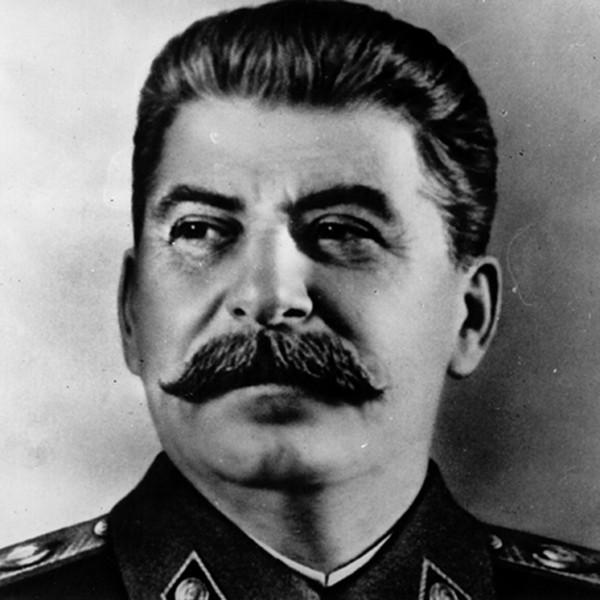
Stalin

Writing in exile in 1936, Trotsky is sniping from the side lines. He writes: “Why now, after the cessation of intervention, after the shattering of the exploiting class, after the indubitable success of industrialization, after the collectivization of the overwhelming majority of peasants, is it impossible to permit the slightest word of criticism of the leader?” Of course, from Trotsky’s point of view, it wasn’t because of an inherent flaw in the Soviet system. For him, the rot set in with the advent of of the Civil War. “The opposition parties were forbidden one after the other. This measure, obviously in conflict with the spirit of Soviet democracy, the leaders of Bolshevism regarded not as a principle, but as an episodic act of self-defence.”

Trotsky was writing at a time of savage Stalinist pogroms. A year after he wrote this the Russian poet Osip Mandelshtam died in a transit camp. He was one of many. It is, however, worth pointing out, as Alan Woods does in the introduction, how things had deteriorated since the revolution in 1917. In The State and Revolution Lenin had stipulated that there must be ‘free and democratic elections and the right of recall for all officials’ and ‘gradually, all the tasks of running the state to be carried out in turn by the workers: when everyone is a “bureaucrat” in turn, nobody is a bureaucrat’ – thus introducing an element of direct, as well as elective, democracy. Remember that this a year before some women won the right to vote in the UK and 11 years before all women could vote.

Leon Trotsky

As Woods writes: “Contrary to the calumnies of the critics of socialism, Soviet Russia in the time of Lenin and Trotsky was the most democratic regime in history.” Woods is obviously a socialist sympathiser but the non-Marxist historian E. H. Carr at this point agrees with Woods. In his epic The Bolshevik Revolution he approvingly quotes Lenin in the second All-Russian Congress of Soviets in 1917 as saying: “As a democratic government we cannot evade the decisions of the popular masses, even if we are not in agreement with them.” However, this appears to be a temporary position, according to Carr, who suggests that there was a ‘dilemma of a socialist revolution struggling retrospectively to fill the empty place of bourgeois democracy and bourgeois capitalism in the Marxist scheme’.

Lenin

Interestingly, however, Carr makes a startling comparison between Marxism and Adam Smith – the darling of many right-wing thinkers. The latter, writes Carr ‘has not escaped in recent years the charge of utopianism commonly levelled at Marx and Engels and Lenin’. And he continues: “Both doctrines assume that the state will be superfluous in so far as, given the appropriate economic organisation of society, human beings will find it natural to work together for the common good.” And further ‘both doctrines are consistent with belief in an economic order determining the superstructure of political ideology and behaviour’. And let’s not forget that, like Marx, Smith also believed in a labour theory of value.

Returning to Trotsky, we find that he, in 1936, is still claiming that: “Under a nationalized economy, quality demands a democracy of producers and consumers, freedom of criticism and initiative – conditions incompatible with a totalitarian regime of fear, lies and flattery.” Further: “No new value can be created where a free conflict of ideas is impossible.” This could be a criticism levelled by the 19th century liberal philosopher John Stuart Mill and his concept of the market of ideas.

At this point, however, we need a reality check. Despite Trotsky’s often apposite criticisms of Stalin, it is not at all clear whether things would have been any better under his rule. As Ian Thatcher writes in his biography Trotsky there were several ‘profound weaknesses in Trotsky’s writings. Above all, his alternative programme contained no guarantees that the USSR would be any richer or more democratic under Trotsky’s guidance’. And: “Given his strong conviction of the correctness of his political viewpoints, it is questionable how free and open debate would have been under Trotsky’s leadership. In any case, it is doubtful whether he would have submitted to a majority vote against him.”

Finally, however, Thatcher reminds us: “Even should capitalism flourish, there should be good reason to consider Marxism’s, and Trotsky’s, criticisms of its injustices and flaws. If there is no such thing as perfect planning, it is also highly unlikely that there is perfect competition.” And: “The best of today’s Marxists seek to learn from the mistakes of the past, and place far more emphasis on democracy and the importance of the independent initiative of the working class rather than on the tutelage of individuals.”

An indifferent world

WHAT if the universe is completely indifferent to us and to all life on earth? There is no God or gods and no guiding rationale. It’s an idea that runs counter to the age-old search for meaning – the succour that is supposedly offered by a supreme being. But what if a truly meaningless universe is actually liberating? That’s the position taken by Albert Camus.

And in his fascinating book The Meaning of Life and Death, Michael Hauskeller it is, fittingly, Camus’s position that he examines at the end. He points out that it was after the devastation of the two world wars that people began to wonder whether there was something wrong with a world that permitted such horrors, let alone an all good, omniscient God. In his novel The Plague Camus reflects this when he writes: “Cold fathomless depths of sky glimmered overhead, and near the hilltop stars show hard as flints.” It’s a cold, heartless world that Camus paints – no pity, no compassion. But this the ground whence Camus starts.

For him the absurdity of of our existence emerges when our yearning for meaning bumps up against the utter meaninglessness of the universe. According to the second law of thermodynamics the universe is inexorably moving from a state of relative order to ever more disorder, possibly infinitely. And all we can do is hold up this process for a few years before merging into the disorder.

Even if there is some meaning, it will be for ever beyond the limits of our knowledge. In the Myth of Sisyphus Camus writes: “I don’t know whether this world has a meaning that transcends it. But I know that I do not know that meaning and that it is impossible for me to know it.” For Camus, then, meaning does not lie in some transcendent realm beyond our understanding, but as a function of our understanding, which, therefore, is accessible to us.

In this situation, according to Camus, the most important philosophical problem is suicide – as Hamlet put it ‘to be, or not to be’. Is a world in which there is no meaning is there any point in existing? Well, Camus believes there is because this very meaninglessness is liberating and the very foundation of human freedom.

His first move is to claim that the universe is not malign in its indifference but, rather, in its indifference it is actually benign.

And in this benign world we are set free from the shackles of meaning external to existence to live the lives we want to live and to determine how we ought to live. Camus writes: “If the absurd cancels all my chances of external freedom, it restores and magnifies, on the other hand, my freedom of action. That privation of hope and future means an increase in man’s availability.” It might be argued that describing the indifferent universe as ‘benign’ is ascribing it human qualities that are not justified. The universe simply is and it’s up to us to make the best of it. Certainly this doesn’t detract from Camus’s argument, however – indeed, in a way, it might be enhanced by such a view.

But there remains the problem of what we do with our freedom. We may be free if, ultimately, nothing matters. But as Hauskeller points out ‘if the universe does not make any distinction between good and bad, permissible and impermissible, then it is difficult to see why we should not kill people if it suits us’. For Camus, however, this kind of nihilism misses the point of the absurd. “The mark of nihilism is indifference to life, but the absurd is born out of the clash between the indifference that we encounter in the structure of the world and our own desperate desire to live, and to live well.”, writes Hauskeller. “The point is that we are not indifferent to life, certainly not to our own.” If all our ethical life comes from God or the gods or from some rational structure in the universe, then we are entirely dependent on some thing outside of us. But if if there is no guiding principle and no promise of a life after death, only then do we realise how precious life is in the here and now.

Furthermore, humans have the capacity to fight back against the indifference of the universe, to shake its fist at it and demand justice for us and for others by negating its nothingness. As Camus writes in The Rebel: “The moment we recognise the the impossibility of absolute negation…the very first thing that cannot be denied is the right of others to live.”

And, furthermore, while there is no meaning in the universe it is us humans who have the courage to fight back. Camus writes: “I continue to believe that this world has no ultimate meaning. But I know that something in it has meaning and that is man, because he is the only creature to insist in having one.” And, we might add, this also applies to women!

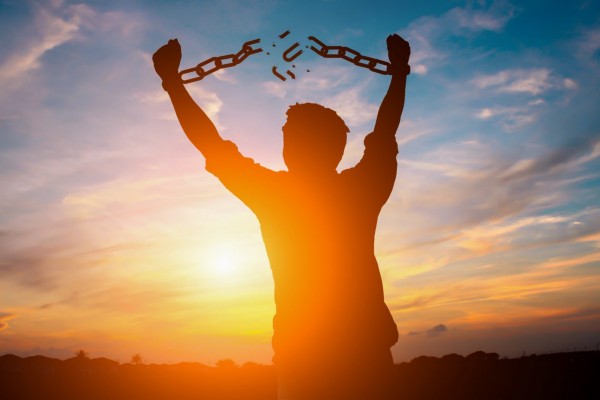
Camus’s idea that humanity finds its own meaning through rebellion against the abyss and the siren call of nihilism while maintaining solidarity with all other humans who are in the same boat is attractive. As Camus says, real rebellion ‘lures the individual from his solitude. Rebellion is the common ground on which every every man bases his first values. I rebel – therefore we exist’. Rebel and live!

The weirdness of rationality!

FOR most of human history the world has been understood by humans through the prism of mythology, superstition, magic and gods. Some would argue that it still is. But the Enlightenment was supposed to change all that, or at least some thought that tempering it with it with a bit of reason wouldn’t be such a bad idea. As D’Alambert wrote in response to Rousseau’s attack on science and rationality ‘even assuming that we might be ready to yield a point to the disadvantage of human knowledge, which is far from our intention here, we are even further from believing that anything would be gained by destroying it’. And, further, that ‘vice would remain with us, and we have ignorance in addition’.

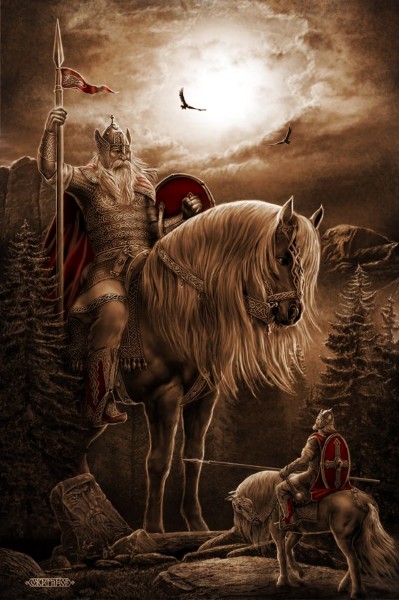
An example of Slavic mythology.

But this idea of at least trying to deploy a little more rationality, even if humans are not always very good at it, has proved to be surprisingly controversial. Typically, opponents of the Enlightenment set up a strawman fallacy by characterizing it as placing the God of Reason above all else and then proceeding to knock it down. But true rationalists are acutely aware of how fragile and precarious it is; how easy it is to succumb to our cognitive bias and sink into our social political comfort zones and echo chambers – and mythology.

Intriguingly, Steven Pinker in his book Rationality acknowledges that no matter how desirable rationality may be, it is not the natural human way. He writes: “We children of the Enlightenment embrace the radical creed of universal realism: we hold that all our beliefs should fall within the reality mindset.”

However, Pinker argues, those who give credence to this creed are the ‘weird ones’. And he adds: “Submitting all of one’s beliefs to the trials of reason and evidence is an unnatural skill, like literacy and numeracy, and must be instilled and cultivated. And for all the conquests of the reality mindset, the mythology mindset still occupies swathes of territory in the landscape of mainstream belief.” As one example, he writes that more than ‘two billion people believe that if one doesn’t accept Jesus as one’s saviour one will be damned to eternal torment in hell’.

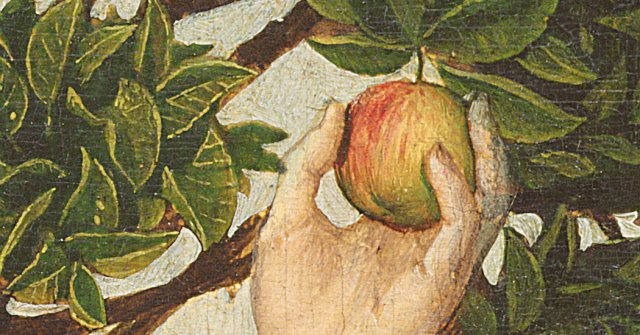
The Garden of Earthly Delights by Hieronymus Bosch

And when the so-called New Atheists – Sam Harris, Daniel Dennett, Christopher Higgins and Richard Dawkins – dared to argue robustly that belief in ‘God fell outside the sphere of testable reality’ they became targets of some quite vicious attacks, not only from religious people but from mainstream intellectuals as well. Pinker also has an interesting take on the Trump administration: “The brazen lies and inconsistencies of Trumpian post-truth can be seen as an attempt to claim political discourse for the law of mythology rather than the land of reality.”

As you may have gathered by now Pinker is here to praise reason, not to bury it. Interestingly, he does not believe in progress – at least not as teleological force. He writes: “Progress is shorthand for a set of pushbacks and victories wrung out of an unforgiving universe, and is a phenomenon that needs to be explained.” And the explanation, according to Pinker, is rationality. “When humans set themselves the goal of improving the welfare of their fellows (as opposed to other dubious pursuits like glory or redemption), and apply their ingenuity to institutions that pool it with others, they occasionally succeed.” And when the successes take note of the failures, the benefits can accumulate, and we call the big picture progress.”

Rodin’s The Thinker

Rationality also has a role to play in moral progress, according to Pinker. “My greatest surprise in making sense of moral progress is how many times in history the first domino was a reasoned argument.” Eventually, after going viral, the conclusion would embed itself in society ‘erasing the tracks of the arguments that brought it there’. For example, a logical argument was required, and provided by the French theologian Sebastian Castellio, against the religious intolerance of John Calvin and the practice of burning heretics at the stake. Today, it just seems obvious, just as it seems obvious, to most people at least, that slavery is wrong. But it was Frederick Douglass, himself born into slavery, who used the rules of logic to demolish the case for slavery.

In essence, then, while rationality isn’t a universal panacea, it does have a universal appeal that transcends our individual concerns. As Pinker writes: “Our ability to eke increments of well-being out of a pitiless cosmos and to be good to others despite our flawed nature depends on grasping the impartial principles that transcend our parochial experience.”

And interestingly, from the perspective of Salisbury Democracy Alliance, he argues that while elections ‘can bring out the worst in reasoning’, representative government ‘could be supplemented with deliberative democracy, such as panels of citizens tasked with recommending a policy’.

So, let’s hear it for that fragile capability humans have for reason. It may not be our natural habitat but it is for this very reason that it needs to be nurtured like the most exotic and rarest of plants.

Do humans need to be commanded?

“A new commandment I give to you, that you love one another; as I have loved you, that you also love one another.” So Christ is reported to have said to his disciples in John 13:34. As it happens it is also the commandment that the Venerable Alan Jeans, Archdeacon of Sarum, chose to form the basis of his sermon at the Civic Service in St Thomas’s Church to celebrate the election of the 761st Mayor of the City of Salisbury – Cllr Tom Corbin.

It is an interesting quote that raises the obvious question: does humanity require commanding in order to ‘love one another’? Or is the ability, if not always the practice, to love one another inherent in humanity?

In his sermon the Archdeacon argued that there are many kinds of love. We might say, for example, that we love our car or a painting or a piece of music.

Not the sort of love Christ had in mind

But Christ explicitly says that this commandment to love one another is a ‘new commandment’. Really? What is he saying? That prior to his commandment people didn’t know how to love one another, or if they did know they didn’t practice it enough, so they needed a commandment to enforce it? It’s a bit like the the question that Socrates posed to Euthyphron 2,500 years ago: “Do the gods love holiness because it is holy, or is it holy because they love it?” Does Christ command that we love one another because it is the right thing to do, or is it the right thing to do because Christ commands it? If it it is the latter then do we simply have to take Christ’s word for it? This position appears to be endorsed in John 15:7: “If you abide in me, and my words abide in you, you will ask what you desire, and it shall be done for you.” On the other hand in John 15:6: “If anyone does not abide in me he is cast out as branch and is withered, and they gather them and throw them into the fire, and they are burned.” So, we don’t need to know whether the word of Christ is right, we simply have to follow his word, or suffer the consequences.

But does humanity need a commandment to love one another and the threat of being burned if we do not abide in Christ? It is hard not to sense a whiff of the Original Sin in this need for commandment.

The doctrine that humans inherit a tainted nature through being born, of course, stems from the expulsion of Adam and Eve from the Garden of Eden. As Paul says in Romans 5:12: “Therefore, just as through one man sin entered the world, and death through sin, and thus death spread to all men, because all sinned- “Here we get into the deltoid schisms of Protestant thinking and ideas like ‘total depravity’ in which humans’ motivations, even though they might appear to do good, are always sinful or self-regarding – similar to modern day secular thinking found in egoistic morality. On the other hand some thinkers, like the clergyman Samuel Hoard (1599-1658) argued for ‘partial depravity’, which basically claims that humanity does have some choice in the matter and can choose salvation and God.

In more modern times these positions are starkly represented by the English philosopher Thomas Hobbes, who took a largely dim view of human nature, and Jean Jacque-Rousseau, who was rather more optimistic.

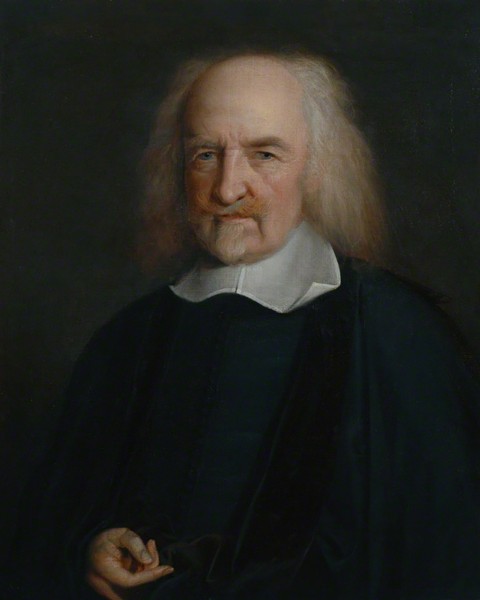
Thomas Hobbes looking suitably grumpy

For Hobbes human life in the state of nature was ‘solitary, poor, nasty, and short’. His answer was to relinquish our freedom into the hands of a ‘solitary sovereign’ – the Leviathan, the name of his magnum opus. Hobbes, incidentally, came from Warminster and there is an early edition of his book in the town’s library.

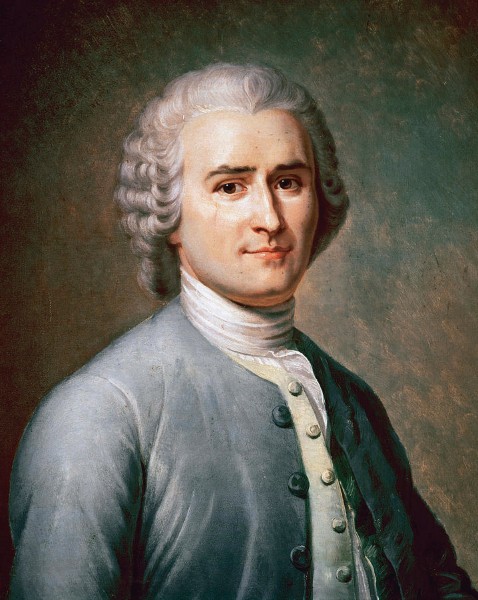
Rousseau, on the other hand, takes the opposite view. For him, we are naturally good in the state of nature and it is civilization that warps that natural goodness, although it should be said that his state of nature was a thought experiment rather than an actual state.

Rosseau looking decidedly sunnier

Nevertheless, for Rutger Bregman in Humankind Rousseau is largely correct. He argues that for most of human history we ‘inhabited a world without kings or aristocrats, presidents or CEOs’, and problems began about 10,000 years ago. “From the moment we began settling down in one place and amassing private property, our group instinct was no longer innocuous. Combined with scarcity and hierarchy it became downright toxic.”

It is fair to say that this a pretty simplistic view of humanity and this blog will explore a more nuanced approach in a future blog. But for the moment it should be said that Bregman is not advocating a return to a pre-civilized society and he acknowledges that things have become a lot better for millions of people over the last 200 years or so. But, he argues that when you ditch Original Sin and Hobbes you find underneath it all that most people are pretty decent most of the time and don’t need a commandment from Christ – or anyone else for that matter – to love one another.

We could also make the point that many evolutionists now believe that altruism forms a part of our genetic make-up and, in its conceptualized form, helps us to love one another – although of course it will always be in competition with our more selfish instincts. Even Richard Dawkins in his celebrated book The Selfish Gene writes: “However, as we shall see, there are special circumstances in which a gene can achieve its own selfish goals best by fostering a limited form of altruism at the level of the individual animal.” What Dawkins fails to say is that a gene cannot be either selfish or, indeed, pretend to be altruistic. You cannot simply conflate the individual gene and the genome. This sort of thinking comes up with logical absurdities like reciprocal altruism. If part of our make-up is indeed altruistic, then it has to be genuine altruism.

One cannot help feel that Christ’s commandment infantilizes humanity. Indeed, he refers to his disciples as ‘little children’. Is it not time that we grew out of this infantilism and took responsibility for our own lives and actions? Immanuel Kant argued that the Enlightenment represented the maturing of humanity. Perhaps it is time that we took this notion seriously.

Levels of consciousness

IT often feels that we are either conscious or unconscious. But are there, as this blog investigates, more levels of consciousness? The idea that there are varying degrees of consciousness has a long and distinguished history ranging from Plotinus to to Jung and Freud in the 20th century. Jung, for example, identified the mineral world, the plant world and the animal world as degrees of consciousness. Freud identified the oral, phallic and genital stages, while many present day psychologists probe multiple levels of consciousness. And it is in this tradition that Nathan Field lays out his fourfold hierarchy in Breakdown and Breakthrough.

Levels of consciousness

The first level is what he calls One Dimensionality, which is most apparent in very young children. Field writes: “The focus of infant awareness is located in certain physical areas: the skin, the mouth, and the inside of the body which may be comfortably full or painfully distended.” It can also be apparent in some autistic children.

Two Dimensionality is more interesting because it moves out of the Self to the acknowledgement of the Other, but at the expense of an inner life. This two dimensionality is characteristic of schizoid personalities in which ’emotions appear to be skin deep’. Field writes: “There may be a great deal of surface drama, passionate declarations, threats, violent or hysterical gestures but the observer remains strangely untouched, even alienated.”

Two dimensionality

And while there may be surface drama, it is also characterized by opposites that can switch quickly from, for example, love to hate in an instant.

As Field points out ‘politics, news and entertainment are all deeply contaminated by two dimensionality’. In the political arena, reasoned opinions readily degenerate into convictions as political theory becomes fixed in ideology and, finally, crystalized in dogma. Doubt and complexity are difficult to sustain and harden into dead certainties. Here the ‘millions passionately devoted to fundamentalist religions and political beliefs are relieved from the torments of ambivalence and indecision’. There is, however, a positive element to two dimensionality which manifests itself in ‘unwavering loyalty, uncompromising rectitude, unquestioning obedience’, although it’s not difficult to see how these positives might morph into the dark side.

Three dimensionality, says Field, ‘represents all that civilization holds dear: rationality, balance, adulthood, fairness, flexibility, restraint, the ability to listen and to respect the integrity of another’. Field continue: “The intellectual faculty combines with our primary instincts to produce the capacity for imagination, metaphor and symbolisation, which are the basic requirements of all creative endeavour.” And while two dimensionality is characterized by polarity and conviction, three dimensionality is ‘searching, reflective, ambivalent’. As people move from two to three dimensionality they become more rounded and resilient.

A more balanced approach with three dimensionality

More controversial, perhaps, is Field’s conception of Four Dimensionality, which is characterized by awareness of the movement from Self to Other of the sort that can happen between a ‘mother and her baby, between twins, members of the same family, partners, lovers, friends and, not least, enemies’. Although it is often experienced between the Self and the Other, Field stresses that it can also manifest itself as an enriched sense of Self. And he adds: “Whether shared, or experienced in solitude, the four-dimensional state is one that many people have known and tried to convey in art, music, and, most especially, in the paradoxical utterances of mystical literature.”

Spontaneity is important in all of this but Field also points out that it can also be aided by prayer, meditation or therapy.

An important aspect of Field’s theory is that the dimension incorporates the third, the third the second and the second the first, but he insists that each dimension adds something of its own.

But the really controversial aspect of Field’s thought is his interest in shamanism and his belief that it emerges out of the fourth dimension – and that Jung was a shaman: “In so far as Jung was able to assimilate his dissociative and pathological tendencies it places him, like the shaman, in the category of the ‘wounded healer’ or, more precisely, one who heals by virtue of the partial healing of his own wound, since if it had healed completely he might too easily forget how it felt to be sick and the capacity to identify with the patient would be impaired.”

While Freud saw the unconscious as being something to be controlled, Jung embraced it in the form of the collective unconscious, a vast creative force, which also tapped into his research into the medieval tradition of alchemy.

Many people might baulk at the fourth dimension and stick with the third but Field sides with Jung, insisting that the fourth ‘does in fact exist’. He concludes: “It is not a delusion, but carries with it the subjective conviction of being our true state; or at least closer to our true state than everyday consciousness.”