Our divided brain

WHY is it that so much of our thinking is driven by dualisms? We have, for example, the division between mind and body; spiritualism and materialism; absolutism and relativism; rationalism and sensationalism; idealism and realism; subjectivism and objectivism.

In some cases we can lay the reason at the door of a particular philosopher. Rene Descartes, for example, although he didn’t invent the mind-body problem, certainly cemented it into our (divided?) consciousness. Gilbert Ryle in The Concept of Mind lays the blame fairly and squarely on him, arguing that Descartes could not envisage the mental as ‘just a variety of the mechanical’. The fact-value dichotomy has its origins in David Hume’s idea that one can never infer an ‘ought’ statement from an ‘is’ statement. The conflict between realists and idealists has a long history. Three ways of tackling these divisions involve either choosing one side and going for broke; attempting a synthesis; or trying to collapse the problem. For example, one might insist on the reality of the world as perceived by us or drift towards the idealism of Bishop Berkeley. Schopenhauer attempts a synthesis of the split between the phenomenal and noumenal with his double aspect theory of perception while Hilary Putnam attempts to collapse the fact-value dichotomy in his appropriately entitled book The Collapse of the Fact/Value Dichotomy.

But there is another dualism involving views about the stability or otherwise of the world. Famously, Plato attempted to ‘fix’ the flux of the phenomenal world with his notion of Ideas or Forms. Thinkers like Henri Bergson, on the other hand, embrace the flux of multiplicity and motion while his fellow French philosopher Michel Serres takes the valorisation of flux to extremes. In his extraordinary book Genesis he writes: “The differential of the flux is fluxion. So the flux is a sum, and classical rationality is safe, I am going from the local, fluxion, to the global, flux, and conversely.” This is amazing stuff; it’s not just that the content expresses the philosophy of flux, the whole form of the book itself is in flux, although this is undermined, of course, by the fact that it is contained within the traditional format of the book.

In his book Experience and Nature, however, John Dewey tries to collapse the problem by arguing that the entanglement of stability and uncertainty drives us towards philosophy – it is the very stuff of philosophy. “Our magical safeguard against the uncertain character of the world is to deny the existence of chance, to mumble universal and necessary law, the ubiquity of cause and effect, the uniformity of nature, universal progress, and the inherent rationality of the universe.” And again: “But when all is said and done, the fundamentally hazardous character of the world is not seriously modified, much less eliminated.” Indeed Dewey goes much further to argue that ‘just this predicament of the inextricable mixture of stability and uncertainty gives rise to philosophy, and that it is reflected in all its recurrent problems and issues’.

What if, though, these ‘radical oppositions’ have an even deeper foundation in the very structure of our mind? certainly Iain McGilchrist in The Master and his Emissary claims that the division between the left and right hemispheres has a profound affect on the way we think. In very broad terms we could see one side of the brain favouring stability, realism and fact while the other privileges flux, idealism and imagination. Of course, one has to be careful not to simply pick those examples that tend to support this view and ignore those that don’t – cherry picking in other words. Nevertheless, there is sufficient plausibility in the argument to stake the claim that at least some of our penchant for philosophical divides resides in the structure of the brain itself. Indeed McGilchrist writes that our dualistic way of thinking points to the ‘fundamentally divided nature of mental experience’. He believes that our dualisms might consist of metaphors that ‘have some literal truth’. It may be that we still need to choose, synthesise or collapse these dualisms but we can, at the very least, finally accept that mental division is a natural phenomenon that may be overcome once we know its physical foundations.

Who knows, these considerations may also have relevance to our tendency towards social and political polarisation and our apparent need to label ourselves as ‘leaver’ or remainer’. If we stop labelling ourselves and start acknowledging that this practice is deeply embedded in our psyche and instead, for example, explain why we voted one way or another, then perhaps we can begin to bring the two hemispheres to work in greater harmony – and our divided polity along with it. The alternative prospect, however, that we are for ever condemned to divisions that cannot be overcome.
Necessity, freedom and anxiety

MANY critics of today’s society concentrate on neoliberalism, taking it to be a kind of Capitalism on steroids. If only it could be overcome, then Capitalism itself can be tamed and shown to have a human face as wealth is redistributed and the Welfare State rebuilt. A previous blog – Death of a superhero – Homo Economicus? – demonstrated how the definition of value pioneered by Adam Smith, Ricardo and Marx was turned upside down to help create the theory of Marginal Utility, which in turn led to our ‘superhero’.

But according to the Swedish philosopher Martin Hagglund in This Life – Why Mortality Makes Us Free, this sort of analysis misses the point. What is needed is not a reversion to the idea of surplus labour value or what Hagglund calls socially necessary labour, but a ‘revaluation of value’. At the heart of the book is what he calls secular faith, that is a faith in our finitude as opposed to the eternity embodied in religious faith. His fundamental argument is that faith in God and/or the eternal is incompatible with a genuine commitment to and caring for people. This does not mean that people of faith don’t help people but that if we can appeal to the eternal then, ultimately, nothing matters except eternity itself and love of God. “This becomes salient when we are moved to acknowledge our deepest commitments, making explicit what is implicit in our passion and pains,” he writes. And again: “This secular faith, I argue, opens the possibility for all passion and meaningful engagement,” which is shut down by a belief in the eternal and the indifference it can engender in the here and now. Certainly, faith and a belief in God can inspire one to do good deeds, but ultimately one is doing good in the name of God or one’s faith rather than for people. In short, he argues that we should concentrate on freedom in this world rather than salvation in the next.

Provocatively, Hagglund identifies ‘spiritual freedom’ not in the realm of the eternal but in secular faith as he defines it. Spiritual freedom entails the ability of the agent to ‘ask herself how she should spend her time and be responsive to the risk that she is wasting her life’.

The second half of the book takes a decidedly radical political turn building on his concept of secular faith, drawing heavily on the work of Karl Marx and in the process rescuing him from the perversions and distortions of his thought in various disastrous 20th century social experiments. In This Life Marx is rehabilitated as a radical humanist whose aim was to reduce what he called the Realm of Necessity and enhance the Realm of Freedom – individually and collectively. Hagglund heavily criticises left-leaning critics of Capitalism, including liberals and social democrats, for restricting their criticism to the redistribution of wealth created by socially necessary labour. What is needed, according to Hagglund, is a ‘revaluation of value’, echoing Nietzsche, such that wealth is not defined by the amount of profit generated by socially necessary labour but, rather, by the amount of socially free time we can create while reducing the quantity and increasing the quality of the former.

Unlike Smith and Ricardo, Hagglund claims, Marx saw Capitalism as a historically contingent ‘form of life in which wage labor is the foundation of social wealth’. As such ‘capitalism does not reflect an original state of nature and does not finally determine who we can be’. Hagglund adds that the ‘capitalist measure of value is inimical to the production of real social wealth, since it valorizes socially necessary labor time rather than socially available time’. Hence, while redistribution, welfare and concepts like the Universal Basic Income (UBI) can be emancipating and should not be discouraged, ultimately they accept the fundamental value system underlying Capitalism.

His solution is what he calls democratic socialism, which relies on three main principles: 1) that we measure our wealth – both individual and collective – in terms of socially available free time’ and embrace the ‘dead labour’ of machines to enable this; 2) the means of production should be collectively owned and cannot be used for the sake of profit, which does not, however, commit us to ‘top-down model of central planning’ but is a necessary ‘condition for the reciprocal determination of part and whole in the economy’; 3) the principle formulated by Marx – ‘from each according to his ability, to each according to his needs’. According to Hagglund, this allows us ‘not only to live our lives by satisfying our needs but also to lead our lives by cultivating our abilities’.

The spiritual freedom that Hagglund writes about as part of a secular faith in the finite also means that we have to face head-on the existential anxiety that it necessarily engenders because of the risk of failure that it embraces. Spiritual freedom entails risk and the ever-present danger that a long-standing commitment – like love or political activism – is vulnerable to loss and failure. Yet, according to Hagglund, if we are committed to spiritual freedom we cannot have recourse to anything that insulates us from this risk – like religion or even ancient Greek principles like Stoicism. There may even come a time when one’s entire life’s project comes to be recognised as a failure or even a waste of time in which case a kind of existential death occurs as your life’s purpose dies. It’s a huge risk and one that anyone who has lost a loved one or whose political project is crushed will recognise. The question then becomes how to dig oneself out of this existential risk and the terrifying prospect that it might not be possible!

The death of a Superhero – Homo Economicus?

“‘Nowadays people know the price of everything and the value of nothing.’ Oscar Wilde in The Picture of Dorian Gray.

WHAT is economic value and how is it created? This a key question and one that hasn’t seriously been addressed for a long time. For some it underpins all the critiques of modern capitalism including extreme individualism and the atomization of society. We all know about inequality, which was one of the problems discussed at Salisbury Democracy Café on 11 January, and the concept of the Superhero Homo Economicus is all powerful. The philosophical underpinning for this comes in the form of libertarian philosophers like Robert Nozick in Anarchy, State and Utopia. Meanwhile Ayn Rand expressed it in literary form in Atlas Shrugged. It was driven by economists like Hayek and Mises and politically by Thatcher and Reagan. But is there an underlying narrative that holds all this together?

It turns out that there may be – and it has all to do with the definition of economic value. According to Mariana Mazzucato – Prof in the Economics of Innovation and Public Value at University College, London – in her book The Value of Everything. According to her the first attempt to establish a formal theory of value was made in the mid-18th century by a group of French thinkers dubbed the Physiocrats. One of them, Francois Quesney, thought that value rested in the soil – or rather the farming of the soil. But it was Adam Smith, followed by David Ricardo, who first attempted to establish value in labour. And then Karl Marx refined these theories and came up with his own theory of value, culminating in the claim that ‘labour power creates surplus’, which is then expropriated by capitalists. This was his answer to the question relating to how capitalists and financiers came to be so rich when value was created by labour. Indeed, this was a very awkward question for the wealthy clique who desperately needed an alternative narrative, one that would justify their privileged position.

A group of thinkers including William Thompson, Thomas Hodgskin and John Gray came up with the solution in the form of Marginal Utility theory, which, according to Mazzucato, states that ‘all income is rewards for a productive undertaking’. Up until now value was assumed to reside in labour or the land, but Marginal Utility theory conveniently turns this on its head so that instead of prices being determined by value, value is determined by price. This means that all income and wealth is justified because income and wealth determines value. For our purposes, the significance is that whereas previously thinkers placed non-productive (wealth extraction) and productive (wealth creation) activities in separate categories, Marginal Utility theory placed them in one category – wealth creation!

However, for all this to work as it should two more assumptions were required. These were provided by ad hoc additions in the form of ‘rational choice theory’ – giving rise to our Superhero Homo Economicus and allowing its proponents to categorise unemployment as a lifestyle choice and poverty the result of poor decisions – and the notion of ‘equilibrium with perfect competition’ with its private good/public bad narrative. Lo and behold! You now have an entirely different theory of value and one that at a stroke eliminates the value of labour itself, not to mention Marx’s view of the volatile dynamism of capitalism.

Mazzucato concludes: “I have tried to open the new dialogue by showing that the creation of value is collective, that policy can be more active around co-shaping and co-creating markets, and that real progress requires a dynamic division of labour focused on the problems that twenty-first-century societies are facing.”

The problem is that Marginal Utility theory and its corollaries is so dominant that it doesn’t even appear as a theory but simply a part of the natural world like the air we breath. Even the Great Recession of 2008 barely dented it. And students of economics in our universities are not taught about alternative theories. But we should remember that for decades thinkers like Hayek and Mises were outriders and it was years before their ideas started to gain traction as Les Trente Glorieueses began to unravel. It’s happened before so it can happen again but it needs many more books like The Value of Everything and other communicators to make the case before we can finally announce the death of our Superhero – Homo Economicus.

Hail to the City of Being

The Tower of Babel

As we enter a new decade (unless you think it doesn’t actually start until 2021 of course) it might be useful to ask ourselves what sort of society we want. Party politics can be a messy affair, so sometimes it’s good to stand back and ponder.

But to know what sort of society we want we have to know what sort of society we have now. Many will argue that what is often called neoliberalism is still the dominant ideology. This is the economic model based at it’s most extreme on the mythical Homo Economicus, an attenuated vision of human nature which assumes that we all act in our own rational self-interest. This is often accompanied by a world view that encompasses lower tax, deregulation and a much reduced public sphere. Many would argue, of course, that Homo Economicus is a false view of humanity and that we are, rather, a more social animal than it allows. Nevertheless, with the rise of the gig economy in which employers buy discrete packages of time rather than the person, and now draws in nearly five million people, this does seem to be an age of increasing atomization and alienation. What sort of society is this?

According to the psychoanalyst and social philosopher Erich Fromm it is the ‘have’ society, which he contrasts with the ‘being’ society. The former is about an obsession with possessing and consumption, the latter is a process of living and growing. He gives many examples of what he means but the simplest involves types of knowledge: “Optimum knowledge in the being mode is to know more deeply. In the having mode it’s to have more knowledge.” It is sobering to think that the following words were written in the mid-1970s in his book To have or to be: “To acquire, to own and to make a profit are the sacred and unalienable rights of the individual in the industrial society.” What would he think of our society as we enter the world of the Internet of Things and our experience and data have become the new raw material of what Shoshana Zuboff calls Surveillance Capitalism? And again, his analysis of the threat to representative government is also of relevance today “For even the remnant of democracy that still exists is doomed to technocratic fascism – the very type of society that was so much feared under the name of ‘communism’ – unless the giant corporations’ big hold on the government (which grows stronger daily) and on the population (via thought control through brainwashing) is broken.”

Fromm claims, among other things, that the ‘have’ society has encouraged and embedded an intellectually passive ‘spectator democracy’ and argues that we should foster an active ‘participatory democracy’ replacing Homo Economicus with the critically engaged citizen. To this end he is an advocate of exactly the kind of deliberative democracy that Salisbury Democracy Alliance is campaigning for with its democracy cafés and so far failed attempts to create a Citizens’ Jury in the city. Even in the 1970s Fromm sees elections as degenerating into ‘exciting soap opera, with the hopes and aspirations of the candidates – not political issues – at stake’. Genuine conviction, he writes, requires two elements – ‘adequate information and the knowledge that one’s decision has an effect’. Wiltshire Council and Salisbury City Council take note!

Among his many recommendations is the creation of a Universal Basic Income, although he doesn’t call it that. “Many of the evils of present-day capitalism and communist societies would disappear with the introduction of a guaranteed yearly income. ” And again: “The guaranteed yearly income would ensure real freedom and independence.”

In what today, with the benefit of hindsight, seems to be unduly quixotic Fromm is optimistic about the emergence of the being society. He sees Medieval culture flourishing because ‘people followed the vision of the City of God’ and the Age of Enlightenment energised people with the ‘vision of the growth of the Earthly City of Progress’. The 20th century has deteriorated into the Tower of Babel. But he concludes: “If the City of God and the Earthly City were thesis and antithesis, a new synthesis is the only alternative to chaos: the synthesis between the spiritual core of the Late Medieval world and the development of the rational thought and science since the Renaissance. This synthesis is The City of Being.” It seems that we still have a long time to wait! But at least we can carry on trying.

Hail to the Idiot!

Descartes – an Idiot?

THE question ‘what is philosophy? is one that is often neglected by philosophers. After all, while there may be a philosophy of science or of art and other disciplines, there cannot be a philosophy of philosophy without vicious circularity in the same way that empirical methods cannot be used to prove empiricism as the Scottish philosopher David Hume demonstrated.

Bertrand Russell attempted to solve the problem by identifying the value of philosophy, rather than its definition, as lying in the study of uncertainty. In his view, once a question has been answered it is no longer a philosophical problem. According to Russell, then, the value of philosophy lies in its uncertainty and ‘while diminishing our feeling of certainty as to what things are, it greatly increases our knowledge as to what may be’ and ‘keeps alive our sense of wonder by showing familiar things in an unfamiliar aspect’. This view also challenges our obsession with getting answers at all costs.

Marx, of course, famously wrote: “Philosophers have only interpreted the world in various ways. The point, however, is to change it.” This is another attempt to show the value of philosophy rather than to define it. As an aside, according to Engels not even Marx called himself a Marxist. But it is possible to call oneself a Marxist without also having to agree with everything he wrote, just as it’s possible to call oneself a Christian without believing every word in the Bible. For example, one may be swayed by Marx’s fundamental materialistic philosophy and his belief that our individual consciousness is largely determined by our material and social being, without necessarily agreeing with his full political agenda, even though this would tend to place you on the communitarian side of politics.

The French philosopher Michel Serres argued that the ‘philosopher is the shepherd who tends the flock of the possibles on the highland…’ – a view closer in spirit to Russell than Marx but again has more descriptive than definitional power.

For Gilles Deleuze and Félix Guattari – two long-time collaborators – philosophy is the creation of concepts. This is a deceptively simple idea but, once said it’s difficult to imagine a philosophical idea that doesn’t in some sense, at least, involve a concept, even one that claims that philosophy is nothing but uncertainty. But what is a concept? According to the Routledge Encyclopaedia of Philosophy ‘there is considerable disagreement about what exactly a concept is’, which isn’t very helpful. In their book What is Philosophy? Deleuze and Guattari seem to have the same problem in as much as the concept ‘has a combination. It is a multiplicity’. Their meaning comes into sharper focus when they give examples, the first of which is Descartes’s ‘cogito’ which itself has three components – ‘doubting, thinking, and being’. Other concepts might be Kant’s Categorial Imperative or analytical a priori judgements, Mill’s Harm Principle, Schopenhauer’s Will to Live or Nietzsche’s Will to Power.

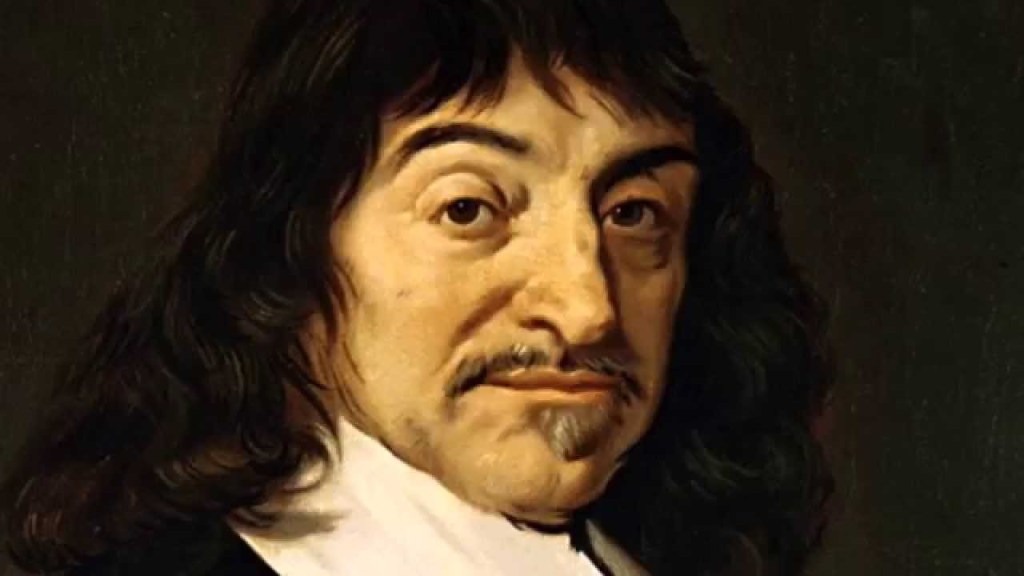
Deleuze and Guattari don’t rest there, however, because they also make the claim that because ‘concepts are fragmentary’, in order to have some consistency they exist on ‘one and the same plane’ – what they rather enigmatically call ‘the plane of immanence’. The work is difficult to fathom because a lot of it is expressed in metaphors, so it’s hard to uncover the underlying meaning. But things become a little clearer when they write that the ‘plane of immanence must be regarded as prephilosopical’ and a ‘field of consciousness’. However, it is what they call ‘conceptual personae’ who activate the concept within the plane. And one of these ‘conceptual personae’ is none other than Réne Descartes, whom the authors describe as an Idiot, hence the title of this article. By now, however, it should be obvious that we are not talking about idiocy in its modern sense but in the original Greek idiotes, meaning private person. In this sense Descartes is the ‘Idiot who says “I” and sets up the cogito’. And again: “The idiot is the private thinker, in contrast to the public teacher”, like, perhaps, Socrates or, in our day, the public intellectual Michael Sandel (perhaps our meaning of the word idiot today applies to the private person who, with apologies to Socrates, leads an unexamined life).

Ultimately, What is Philosophy? has more in common with Marx than Russell or Serres in that, as the translators Graham Burchell and Hugh Tomlinson note, it reads like a ‘manifesto produced under the slogan “Philosophers of the world, create”.’ At the same time, however, Deleuze and Guattari have no firm answers, concluding that ‘concepts, sensations, and functions become undecidable at the same time as philosophy, art, and science become indiscernible’. No answers there then, only more questions!

The precarious soul!

“The awful shadow of some unseen Power/Floats though unseen amongst us. – visiting/This various world with as inconstant wing/As summer winds that creep from flower to flower. -/Like moonbeams that behind some piny mountain shower,/It visits with inconstant glance” From Hymn to Intellectual Beauty by Percy Bysshe Shelley

Let’s be clear, we are not talking about the metaphysical soul. This more like the soul, or consciousness that emerges out of matter. Something like Daniel Dennett’s moment when competence morphs into comprehension. Or, maybe, Thomas Aquinas’s view that if one says that someone has a soul it means little more than simply being alive.

In fact, the 13th century scholar is an interesting thinker. He is generally regarded as one of the most materialistic of theologians, although, unlike modern materialists, he saw no reason to believe that nothing but matter exists. Nevertheless, according to Denys Turner in his book on Thomas Aquinas, the latter shocked contemporary theologians because he ‘seemed scarcely to need a special account of the human soul at all, and therefore would seem to have no basis for an account of what is “spiritual” about human beings’. For Aquinas the soul was intellectual – and for holding such views at the time when he did he sailed very close to the wind indeed.

It is in this spirit, so to speak, that Franco ‘Bifo’ Berardi approaches the subject in his book The Soul at Work – From Alienation to Autonomy: “The soul I intend to discuss does not have much to do with spirit. It is rather the vital breath that converts biological matter into an animated body.” And it is this soul, writes Bifo, that has been rendered precarious by 30 years of neoliberalism. Under Fordist industrialisation the worker had to leave his or her soul at the door of the factory; today the soul itself is harnessed to the neoliberal yoke. As Shoshana Zuboff wrote in The Age of Surveillance Capitalism, matter is no longer the stuff of capitalism, our own experience or data is the new raw material upon which billions are made.

For Karl Marx it was our social being that determines our consciousness, not the other way around as Hegel believed. But for Bifo, in the random regime of fluctuating value under which we live today ‘precariousness becomes the general form of social existence’. And again: “The neoliberal values presented in the 1980s and 1990s as vectors of independence and self-entrepreneurship reveal themselves to be manifestations of a new form of slavery producing social insecurity and most of all a psychological catastrophe.” Once wandering and unpredictable, the soul ‘must now follow the functional paths’. The digitalized information that lies at the heart of every product and service – what Bifo calls ‘semio-capitalism’ in true continental philosophical style – is made possible by the mobile ‘phone as the lived experience of the worker is subsumed into the system.

For Yanis Varoufakis in Talking to My Daughter capitalism is characterised by what he calls exchange value in which everything is commodified and instead of going to the market we are the market. Now, according to Bifo, it’s not human labour that is up for sale but ‘packets of time’. And he adds: “De-personalized time is now the real agent of the process of valorization, and de-personalized time has no rights.”

His solution is not the collapse of capitalism but a society in which it will ‘lose its pervasive, paradigmatic role in our semiotization, it will become one of possible forms of social organization’. Further: “Society does not need more work, more jobs, more competition. On the contrary: we need a massive reduction in work-time, a prodigious liberation of life from the social factory, in order to reweave the fabric of the social relation. Ending the connection between work and revenue will enable a huge release of energy for social tasks that can no longer be conceived as part of the economy and should once again become forms of life.”

What Bifo does not say is that this might not be a choice in the years to come but something foisted upon us by the exponential development of artificial intelligence. For him communism ‘will never be the principle of a new totalization, but one of the possible forms of autonomy from capitalist rule’. But, of course, there is a much simpler way of achieving this and that is by introducing a Universal Basic Income. According to Parijs and Vanderborght in Basic Income it is ‘arguably not only fair but also economically clever to give all, not just the better endowed, greater freedom to move easily among paid work, education, caring, and volunteering’.

From stiff upper lip to Stoicism

IF there is a single distinction to be made between modern ethics and ancient Greek ethics, it could be argued that while the former attempts to establish what is right independently of character, the latter tries to establish what kind of character is needed to lead the right sort of life.

Of course, this is a huge generalisation and there is some common ground in that most ethical positions – Egoism being the main exception – look at ways of determining morality beyond individual interests. The main difference is that modern ethics like Utilitarianism and Kantianism, or Deontology, attempt to establish moral truth beyond the desires of the individual, while the ancients sought to find it in the virtuous individual.

In recent years moral systems like Utilitarianism – which seeks to find the greatest happiness of the greatest number – and deontology – which in Kant’s system eschews consequentialism and prefers universal rules like his Categorical Imperative in the Kingdom of Ends – have come under sustained attack form, among others, philosophers who draw inspiration from the ancient Greeks. A leading figure in this renaissance is Aristotle in a field of ethics that is generally known as Virtue Ethics. In a nutshell neoaristotelianism ask what a virtuous person would typically do to reach a state of eudaimonia – roughly meaning flourishing or well-being. The second part of this question is critical because it plucks the theory from the jaws of circularity of simply stating that a virtuous person is one who acts virtuously. Another ancient philosophy, however, has been making a comeback in recent years in the form of Stoicism, which sits somewhere between neoaristotelianism and the austere asceticism of Cynics like Diogenes by valuing external values as long as they don’t deflect you from a virtuous path.

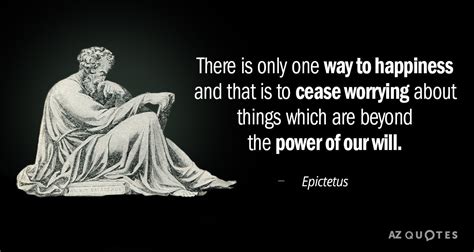
In his book How to be a Stoic, Professor Massimo Pigliucci guides us through the Stoic way of thinking, which is often simplistically referred to as the very British stiff upper lip – needless to say Stoicism is far richer and deeper. According to the author there are three main Stoic disciplines – the first, and perhaps the most important of which, is the discipline of desire. This idea rests on the fact that some things are are in our power while others are not. As the important Stoic philosopher Epictetus is quoted in The Handbook: “Some things are up to us and some things are not up to us.” In order to tell the difference we need wisdom – a key value in ancient Greek philosophy – and an understanding of how nature works based on the best available scientific knowledge of the day. We are then enjoined to accept that which we cannot change, including death, with equanimity while concentrating our attention solely on those things we can change.

The second discipline is often referred to as ‘action’ and centres on concern for others and how to behave in the world and draws on the virtue of Justice. Finally, we have the discipline of ‘assent’ which, as Pigliucci, writes ‘tells us how to react to situations, in the sense of either giving our assent to our initial impressions of a situation or withdrawing it’. Logic and Reason are the prime virtues behind this discipline. And these three disciplines lead into Stoic ethics which rest on a combination of intuitionism, empiricism and rationalism (Stoics are most definitely not moral sceptics!).

Throughout the book Pigliucci engages in an imaginary discussion with Epictetus as a guide through the dense thickets of modern life by applying the Stoic virtues of Wisdom, Courage, Compassion and Integrity in order to achieve eudaimonia. As we have seen, Stoics distance themselves from Cynics by allowing some external goods but they are also distinct from Socrates and Aristotle, both of whom assumed a degree of material comfort as part of their moral vision. For the Stoics, however, character is what matters ‘regardless of our circumstances’. Interestingly, this idea chimes with the Victorian notion of the gentleman, which they regarded as being accessible to any man regardless of circumstances, a view that may well have been influenced by Stoicism. On the other hand, although the Cynics allowed that their asceticism was available to everyone, the idea of living in a tub all your life – as Diogenes did – is not exactly appealing to modern sensibilities.

Stoicism also ‘makes room for both religious and unbelievers, united by their common understanding of ethics regardless of their diverging metaphysics’. It is interesting to note here that the Dalai Lama makes a strikingly similar point in his book An Appeal to the World when he writes: “I see with ever greater clarity that our spiritual well-being depends not on religion, but on our innate human natures, our natural affinity for goodness, compassion, and caring for others.”

Stoicism is an attractive ethical stance not least because of its grounding in the material world. Unlike Egoism it is clearly other-regarding and is a powerful guide for how an individual should live as a ‘citizen of the universe’ as Socrates put it. But still, it is founded on the individual and communitarians are likely to object to that position. However, it does not take a huge leap of imagination to see the Stoical individual emerging from his or her grounding in the collective, shaped and influenced by it but also evolving from it and, in turn, helping to shape the collective.

From chaos to anarchy!

What is anarchy? We all know that the word anarchy is interchangeable with words like chaos or violence and bombs. But is this a fair interpretation of political anarchism? Obviously no. Sure, anarchists have often been associated with violence but equally anarchism itself has a long history of philosophy that acts as a powerful critique of the State.

Anarchy encompasses a huge range of thought, and anarchists often resist attempts to define it because such attempts are, themselves, seen as being anti-anarchist. There are, however, some identifiable threads that range from the extreme egoistic individualism of Robert Nozick to the libertarian communism of Nestor Makhno. Often called the Platform, in the 1920s these anarchists wanted to distance themselves from the communist Bolsheviks and the extreme individualists. In her book The Government of No One Ruth Kinna writes that the Platformists ‘recognised that free individuality developed in harmony with social solidarity’.

A key moment in anarchist history came when Michael Bakunin split from Karl Marx and declared himself an anarchist. The latter agreed with much of the former’s materialistic analysis of society and in particular the impact of patterns of ownership and the driving force of class. But according to Kinna, Bakunin argued, presciently as it turned out that, Marx was ‘unable to see that as long as the State remained in tact, the revolution would be stunted’.

This feeds into the anarchist’s abhorrence of domination, which, as Kinna suggests, is ‘understood as a diffuse kind of power, embedded in hierarchy – pyramidal structure, pecking orders and chains of command – and in uneven access to economic or cultural resources’. But while the egoism of Nozick in Anarchy, State, and Utopia is certainly anti-domination, his claim that the taxation of earnings by the State is ‘on a par with forced labor’ is unlikely to result in the kind of social solidarity so beloved of the socialist anarchists. It should be noted in addition that even Nozick acknowledges that ‘past injustices might be so great as to make necessary in the short run a more extensive State in order to rectify them’.

Arguably, the more interesting kind of anarchism is what Noam Chomsky calls Libertarian Socialism. In On Anarchism he argues that, for example, the welfare state is a recognition that ‘every child has a right to have food, and to have health care and so on – and as I’ve been saying, those programs were set up in the nation-state system after a century of very hard struggle, by the labor movement, and the socialist movement’. It is also a recognition that individuals do not spring fully formed from the womb but are shaped by society or, as Marx put it: “It is not the consciousness of men that determine their existence but their social existence that determines their consciousness.”

There is another interesting strand in anarchist thought that attempts to address the perceived problem of chaos in the absence of the State and the claim by the Wiltshire-born 17th century political philosopher Thomas Hobbes that without the State life for most people is ‘solitary, poor, nasty, brutish, and short’. The opposition to this view is eloquently expressed by Kniaz Petr Alekseovich Kropokin in Mutual Aid: A Factor of Evolution, when he writes that ‘besides the law of Mutual Struggle there is in Nature the law of Mutual Aid, which, for the success of the struggle for life, and especially for the progressive evolution of the species, is far more important than the law of mutual contest’. Indeed, many evolutionary scientists today argue that altruism forms part of our genetic make-up even if it is always in conflict with our more self-interested tendencies.

With all this is mind, and leaning more toward Kropotkin and Chomsky than Nozick, we might find here a new impetus for the idea of a Universal Basic Income. If this was introduced then, it could be argued, that the individual is at least partly freed from the domination of the State and of the corporation while acknowledging that the State is needed to provide the UBI as well as universal services like health care, education and defence. And if it is true that we are social beings, not isolated individuals, and that our social being is partly informed by a regard for others, then it is not inevitable that the provision of a UBI would lead to chaos rather than – well – anarchy, properly understood.

When did they become so cruel?

“Then you too can dance the dance of insanity, that halfway house between catatonia and drooping, a dance that is devoid of spirit but wears a fixed grin, a hollow mask that was one used in a carnival.” Ece Temelkuran.

At the heart of Ece Temelkuran’s book How To Lose a Country is the claim that shameless populists like Trump and Erdogan have filled the causal void of neoliberalism with its ‘ideal’ of an attenuated human beings and the atomized society it has created.

“The ethical vacuum of neoliberalism,” she writes “its dismissal of the fact that human nature needs meaning and desperately seeks reasons to live, creates fertile ground for the invention of causes, and sometimes the most groundless or shallowest ones.” And again: “It is therefore possible to see right-wing populism as providing neoliberalism with its cause.”

Temelkuran is an award-winning Turkish novelist, journalist and political commentator who is an ardent critic of the Turkish president Recep Tayyip Erdogan and, therefore, is forced to live in exile. Her book has the sub-title The 7 steps from Democracy to Dictatorship, which is a response to the complacency that sometimes arises in democracies, often revealing itself in the phrase ‘it couldn’t happen here’.

The first move against democracy, she writes, is to create a ‘movement’ that denies it is a party but consist of ‘real’ people as in ‘this is a movement, a new movement of real people beyond and above all political factions’. In the process the ‘real’ people end up ‘moving against their own interests, and against what are so obviously the wrong targets’ like immigrants rather than the ‘cruelty of free-market economics’. But what is it that makes some movements lead to populists and others – like Podemos, Occupy and Extinction Rebellion – do not? The answer, according to Telenkuran, is the infantilization of the ‘people’. Now this is interesting because it feeds into the narrative that the advertising industry has been hellbent for decades on infantilizing us so that, like children, we want everything now ‘on demand’, undermining whatever facility for delayed gratification we might once have had. It could be argued also that this is the drive behind attempts to reduce the use of cash in favour of plastic because it’s psychologically harder to part with money using the former than it is using the latter. Even some shops are now taking card payments only. And it is possibly behind the convenience and normalization advanced by the big tech companies that enable them to accumulate information about us, package it and sell it on to their real customers, the corporations, as a means to first predict and then manipulate our behaviour. If this sounds like the mad ravings of a conspiracy theorist, have no fear for there is no need for conspiracy – it’s just good business.

Anyway, according to Temelkuran, it’s the infantilization of the populace, or at least significant sections of it, that enables the populist because ‘once you infantilize the common political narrative, it becomes easier to mobilize the masses, and from then on you can promise them anything’. In much of this book Temelkuran seems to echo the sentiments expressed in Hannah Arendt’s epic The Origins of Totalitarianism, especially when the latter writes that the ‘masses’ who ‘for one reason or another have acquired the appetite for political organisation’ but are not ‘held together by a consciousness of a common interest’.

How does all this lead to the kind of mind-numbing cruelty and insensitivity that seems to thrive today? Well, says Temelkuran, and somewhat counter-intuitively, it begins with laughter that during the process of infantilization turns from resistance to bitter and sarcastic humour as joy is twisted into the grotesque. Three years after a dissident movement in Turkey that came to be known as the Gezi Spirit Temekuran writes that: “More importantly, the laughter that had been used as a tool to embrace diversity during the Gezi resistance became a tool to destroy and divide dissidents,”. It’s the point at which cruelty and loss of shame become a badge of honour and the question arises ‘how can they be so cruel?’

As the title of the book suggests there are five more steps to losing ones country and she sees these as her gift to other countries in the throws of, or at least in danger of, falling to populism. As such it does not offer a comprehensive solution to the problem she so clearly articulates. But towards the end of the book Temelkuran does write: “Whatever the answer is, it ought to be clear to all of us that it does not include the luxury of not taking action, namely political action.”

How To Lose A Country is published by 4th Estate.

What would you do if a violinist was plugged into your body?

AT a recent meeting Salisbury Democracy Café a thought experiment was proposed in order to discuss the question of transhumanism. So it might be fruitful and, perhaps, amusing to explore this philosophical device and some of the occasionally exotic examples.

So what, exactly, is a thought experiment? Basically it is an imaginary scenario designed to clarify an issue. One might say that it is similar to a laboratory experiment in that it attempts to remove variables in order to get to the heart of the matter.

Some of these thought experiments can seem ludicrous and once such is the ‘famous violinist’ devised by the philosopher Judith Jarvis Thomson, which is intended to be part of her defence of abortion. In this situation we are asked to imagine that we have been kidnapped and attached to a famous violinist with a fatal kidney problem, whose survival depends on his staying attached to our circulatory system. Thomson hopes that we will agree that the violinist, no matter how important he is, doesn’t have the right to be plugged into our body and that we would be justified in unplugging him. This particular thought experiment is in response to anti-abortionists who argue that a foetus is a person from the moment of conception.

Another far-fetched thought experiment is one dreamt up by the American philosopher Robert Nozick, and referenced in another article on this blog called What’s it like to be a vampire? which itself is a kind of thought experiment, in which he asks us to imagine that we have the chance to be plugged into a machine that will guarantee us a life that is much more pleasant than our current real life. The twist is that, once we have made the decision, we cannot change our mind. In this situation Nozick hopes that we would not choose to be plugged into the machine, thus demonstrating that there is more to life than pleasure. Neither of these scenarios are feasible, although it is possible to imagine that at some time a virtual reality machine might be available to approximate the hedonist experiment. But their plausibility is not the point – their aim is to elucidate a desired response or to clarify a position that can be distracted by side issues.

Another thought experiment is the famous trolley bus. In this situation we imagine a trolley bus that, if it carries on the main track, will kill five people. Fortunately, there is a side track, which will mean that, if the trolley driver decides to take it, only one person will die. What should he do? This thought experiment is used to elicit all sorts of moral reactions and there are seemingly endless variations on the basic model.

So, there you have it. Thought experiments can be useful to help clear the mind and clarify ones position – at the same time they can seem to be so contrived as to have little real-world value. What do you think?