The logic of freedom

The absurdity of life

FOR some the Universe is simply absurd. This realisation happens when all our searches for meaning disappear into the silent Universe, which is indifferent to our petty struggles. It’s when we suddenly understand that we are not really attempting to save the planet against the ravages of climate change but just the flora and fauna (including humans) as they happen to be configured now – the planet will continue for the next 100 billion years or so before it is absorbed by the cooling sun.

But for philosopher Mariam Thalos this sense of absurdity happens when we step outside of the warmth of our collective lives into the cold of the ‘uncentred perspective’. And in an intriguing move in her book A Social Theory of Freedom she argues that this ‘stepping-out experience’ should actually ‘de-absurdize the life’ one lives because ‘afterwards it should feel warmer to reenter your life’. She adds: “If you feel a de-naturing of the world, upon stepping out of your life, you should feel a re-naturing of it upon your safe return.” Unfortunately for some of us this sense of de-naturing, absurdity and alienation persists if we ‘cannot execute the rentry’. Chillingly she writes: “They are those people who, prior to stepping out, lived without a sense of solidarity with others, for you will have an incentive to reenter and resume a much more enlivened life for the sake of those who mattered before you executed your initial exit.”

It may come as something of a surprise to learn that all this talk about solidarity comes at the end of a book about human freedom. But it is essential to her case because for there to be freedom at all there has to be a Self and it is this initial separation that creates that Self in separation from others. For her, and unlike Mary Midgley (who featured in Escaping the cage of the Self on this blog), the Self emerges out of the collective and we humans are ‘shifting constantly back and forth’ between the two – always supposing one isn’t stuck out in the cold of course.

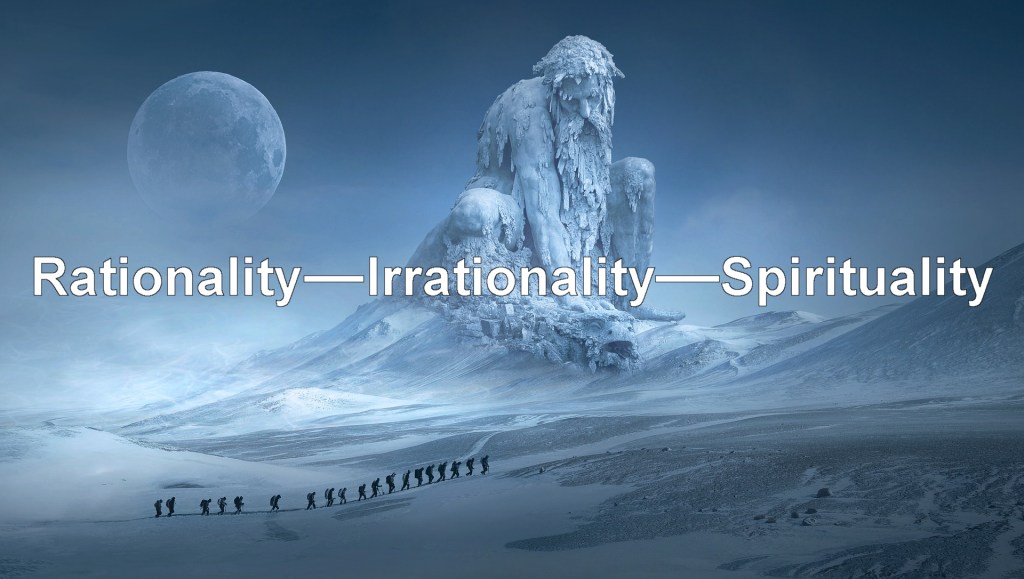
A solitary trail out in the cold!

Thalos describes herself as a compatibilist, which normally means that you accept the terms of determinism but believe that human freewill is compatible with it – indeed many argue that determinism is essential for freewill. They deploy what is called interventionism, which means that although we are subject to the laws of nature, we are able to intervene and effect our own free actions. Thalos, however, argues for a form of compatibilism but one whose ‘conception of freedom will skirt the problem of determinism’. Instead, Thalos argues that freewill is centred on the Self, embedded in solidarity with Others. But crucially the Self cannot be found in experience – as Gilbert Ryle memorably discovered in The Concept of Mind – because it isn’t there. For her freedom is a logic and, she insists, logic is not subject to the laws of nature. From an existential perspective, she argues that the Self is a concept – more precisely a self-conception that emerges out of the logical ‘fit’ between an agent’s conception of themselves and the facts of their circumstances. It is in this very struggle between her self-conception and the constraints she encounters in society that her freedom emerges. Thalos insists that this concept of freedom is a logical, not empirical, form, even though it seems at times as though she is carrying out a delicate high wire act that is in danger of collapsing into the empirical and, presumably therefore, deterministic world.

Ryle is famously takes a derogatory line against Descartes’s ‘I’ which he brands the ‘ghost in the machine.

The ghost in the machine

But Thalos is much more sympathetic to Descartes. “Bodies, as Descartes envisioned, are under the sovereignty of the laws of motion (that we might refer to today as causal laws or dynamical laws), but minds are not. Mind is in no way a space-filler, subject to the laws of motion. Mind is subject to the laws of thought, to laws of reason, hence the separation between mind and body,” she writes.

Where Descartes went wrong was to jump to the conclusion that the ‘I’ was out there in experience. What in fact he had stumbled upon, according to Thalos, was the ‘logic of experience’. And even if, like David Hume and Ryle, we can find no evidence of the Self in experience, it does not follow that we should dispense with the Self. The logic of experience is ‘a theory of action that speaks of ongoing activity mediated by a Self (constituted in part by a self-conception) that is in turn subject to modification by a variety of interactions between Self and Others’.

One of the problems with this position is that it is difficult to see how the purely logical form of the self-conception can interact with Others without collapsing into the empirical world of causation. It is also in danger of a horrible circularity in that saying that the Self is a self-conception is close to the trivial statement that the Self is the Self. And it sails perilously close to the infinite regress because if we say that the Self creates the Self, who creates the original Self?

Although she doesn’t refer to it herself, the solution to the last two problems may be provided by the multi-disciplinary work of Kristina Masholt in Thinking about Oneself in which the author concludes that the Self proper is preceded by a non-reflective self which is able to develop a sense of the reflective Self through its entanglement with the Other. This idea seems to mitigate our concerns about infinite regress and circularity while establishing the foundations of a self which, on Thalos’s account, only achieves freedom when it steps out of the collective. But there remains two major problems: the first is the ever-present danger of collapsing into determinism and the other is that all this talk about the logic of the Self threatens to make freedom the preserve of the educated elite.

It’s fair to say that Thalos is sceptical about the truth of determinism but, nevertheless, is determined to escape its orbit. She attempts to achieve escape velocity by asserting that we do not ‘need to accept exclusively physicalistic, behaviouristic or biological terminology in the description of human behaviour. Instead, she argues for the social sciences because they are not universalistic like physics and biology but are ‘much more sensitive to the presence of individual variation’.

Her attempt to escape the elitist threat involves the use of what she calls Imitative Reasoning in which role models perform the function of creating the ‘fit’ between an individual’s conception of her self and her social circumstances from which her freedom emerges.

Thalos’s book has more surprises and plot twists than Line of Duty and as a result it is difficult to navigate one’s way through the thicket of ideas. It is not clear whether she has succeeded in freeing freedom from the clutches of determinism or whether her conclusion is as disappointing as that of the long-running TV show.
The return of the public

The traditional image of a dystopian future is belied by the reaction to the pandemic

ONE of the most fascinating phenomena in modern life is the tension between the widespread apathy about what might be called traditional party politics on the one hand and an increasing engagement with community activity on the other. If the pandemic has taught us anything it is that international crises do not necessarily lead to a dystopian society of a war of all against all – to mix popular science fiction and Thomas Hobbes. Indeed, the increasing interest in communal activity and a desire to help out seems to matched by an equal and opposite decline in party politics. People seem to be really engaged as long as you don’t call the activity politics. And yet, if things are to change for the better we need people to be engaged in both politics and community action. So, is there a way of achieving this? According to the pragmatic American philosopher John Dewey there is – and it involves deliberation.

Deliberation is important for democracy, according to Dewey

For Dewey legitimacy was as important in 1927 when he wrote The Public and its Problems as it seems to be today. Indeed, he links the majoritarianism of representative government and deliberation as a way of understanding and justifying democracy, not simply as two ideas that may, or may not, combine. He argues that the fact that there isn’t a conflict after every election so that society isn’t always split into friend and foe, is proof that ‘the governors and the governed’ in representative government are not ‘two classes’ but ‘two aspects of the same truth’. Of course, it may seem to us today that the present state of representative government suggests that there are indeed ‘two classes’ of the governors and the governed and that society really is split into friend and foe. Still, one may hope that this is a temporary state not a permanent one and one that can be tempered by deliberation.

Can deliberation bring us together?

In his introduction to the 2016 edition published by Swallow Press Melvin Rogers writes: “Forming the will of the democratic community, for Dewey, is a process of thoughtful interaction in which the preferences of citizens are both informed and transformed by public deliberation as citizens struggle to decide which policies will best satisfy and address the commitments and needs of the community.” And he adds: “It is no wonder that many see Dewey as an important spokesperson for deliberative democracy.” Dewey himself argues that the very forces that have brought about representative government have also halted the ‘social and humane ideals that demand the utilization of government as the genuine instrumentality of an inclusive and fraternally associated public’ which means that the ‘democratic public is still largely inchoate and marginalized’.

In a moment of pessimism Dewey suggests that his arguments seem ‘close to denial of the possibility of realizing the idea of a democratic public’. Many years before the rise of neoliberalism Dewey writes that ‘one of the many obstacles in the path is the seemingly ingrained notion that the first and last problem which must be solved is the relation of the individual and the social’. According to Dewey, however, ‘an individual whatever else it is or is not, is not just the spatially isolated thing our imagination inclines to take it to be’.

And this ‘demands, as we have also seen, perceptions of a joint activity and of the distinctive share of of each element in producing it’. This does not mean that groups, or indeed political parties, will always exist in harmony and without conflict or that an individual will not have conflicting selves. But what it does mean is that the division between the individual and the social is dissolved. If society can be oppressive it is membership of specific associations that is oppressive not our material and social being per se.

Dewey in a statement which could be the motto of Salisbury Democracy Alliance’s campaign for Citizens’ Assemblies, writes that the essential need ‘is the improvement of the methods and conditions of debate, discussion, and persuasion’. Further: “Ideas which are not communicated, shared, and reborn in expression are but soliloquy, and soliloquy is but broken and imperfect thought.”

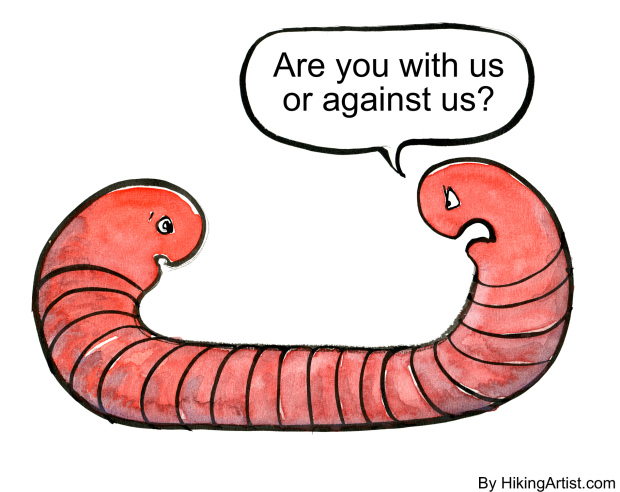
It is difficult not to read into Dewey a plea for more deliberative democracy. His view is that the division between society and the individual is a false dichotomy that can lead to the kind of fallacies that demand that if you are not for us you are against us.

The real question, as this blog has noted before, is how the individual emerges as an embedded but critically engaged citizen – and for that we need the right conditions for such an agent to emerge, an agent that recognises its social being but also helps to shape that social being.

Reason versus reason

IT is often thought that the main threat to the kind of rationality so admired by enthusiasts for the Enlightenment is, well, irrationality – faith, alternative medicines and the New Age movement. Indeed this view seems to be cemented by the wild irrationality of Trump and his followers – although one does wonder sometimes whether Trump was actually being supremely clever by discombobulating his opponents. But that disturbing thought aside, what if the greatest threat to reason is not irrationality but misdirected reason?

Is irrationality the greatest threat to reason?

That is the view of Dan Hind in his fascinating book The Threat to Reason: How the Enlightenment was hijacked and how we can reclaim it. When you first open this book you expect an attack on the irrational but Hind startles when he announces that this approach misses the point. He calls the attack on irrationality Folk Enlightenment and he is dismissive of its adherents, including Richard Dawkins and the late Christopher Hitchens, who make a clear demarcation between the pure defenders of reason and its enemies mired in unreason. “It saturates our intellectual culture and informs many of our assumptions about public life. As a consequence political disputes about the distribution of resources are recast as metaphysical clashes between abstract nouns,” he writes. Further: “Some of those who defend the Enlightenment from its irrational enemies offer up ‘the great divide’ between faith and reason, rather than the old conflict between Left and Right, as the central organising opposition of our time.”

The great divide?

For Hind, however, the real division is between what he calls Occult and Open Enlightenment. He uses the word ‘Occult’ in honour of Francis Bacon, the father of experimental science who, nevertheless, ‘drew on the techniques and love of magic’ in much the same way as Isaac Newton, who wrote more about religion than science, drew heavily on the traditions of alchemy – more in tune with the great the great 16th century magus, alchemist and astrologer John Dee than modern day physics. (See this blog for two articles about Dee and his relationship with the Pembrokes at Wilton House).

It should be said that Hind does not downplay the dangers that can arise from the misuse of alternative medicine or the relativism of postmodernism, although he points out that the latter’s ‘concern that Enlightenment and modernity can provide cover for crimes has ample justification’. However, he makes a persuasive case against the kind of Occult Enlightenment that uses reason to undermine reason itself. And he reserves his main artillery for Big Pharma, which uses science to ‘undermine the open, humane science they claim to champion’ by ‘withholding information’ presenting ‘information to the public in misleading ways’ and then ‘punishing those who inform the public’. He adds: “Given that pharmaceutical medicine is fifty times more lucrative, and considerably more lethal than the herbal and homeopathic alternatives, the institutions that control the business might be suspected of posing a greater threat to reason than their Reiki-practising competitors. Other manifestations of Occult Enlightenment past and present include the ‘desire for total knowledge’ in the service of the British Empire and the invasion of Iraq.

According to Hind, the solution to the threat of misdirected reason is what he calls Open Enlightenment, or an enquiry into the world unencumbered by the self-interested ‘reason’ of the state and corporations. He argues that the Open Enlightenment will be met with ‘ridicule or worse’ but this will be worth it because it will allow us ‘to live at least part of the time as truth-loving individuals’ as we ‘become authors of our own Enlightenment’.

The main thrust of Hind’s argument is a powerful one and a corrective to those of us who have, perhaps, been guilty of taking a kind of perverse pleasure in attacking the easy targets of unreason, while underplaying those forces of reason that actually undermine the reason of the Open Enlightenment. In some ways it follows in the footsteps of The Merchants of Doubt by Naomi Oreskes and Erik M. Conway who exposed ‘how a loose-knit group of high-level scientists and scientific advisers, with deep connections in politics and industry, ran effective campaigns to mislead the public and deny well-established scientific knowledge over four decades’.

In a side argument Hind makes the claim that ‘there is no way that reason can cause us to believe in God, but neither can it cause us to believe that it is wrong to kill’. This appears to be based on Davide Hume’s assertion that reason is the slave of the passions, which raises another mighty split between those who follow Hume and others, like the American philosopher Thomas Nagel who argues in The Possibility of Altruism that ‘just as there are rational requirements on thought, there are rational requirements on action’.

Are faith and morality equally distant from reason?

Indeed, there are some evolutionary biologists, including Dawkins, who argue that altruism is part of our genetic make-up. And it is certainly possible to define altruism in terms of necessary and sufficient conditions. There are also various normative ethical theories that attempt to conceptualize and objectify morality. None of this is to say that the passions do not often, perhaps most of the time, trump reason, but nor does it follow that reason can never be deployed when considering ethics.

However, this is all something of a distraction from Hind’s argument, which remains untouched by the truth or otherwise of his moral assertion. It therefore remains a serious challenge for all of us who in one way or another support the ideals of the Enlightenment, not to fall into the trap of Folk Enlightenment but, rather, to have the courage to create a truly Open Enlightenment.

What’s the point of privacy?

The invasion of our privacy

MUCH has been written – not least on this blog – about the perilous state of our privacy. The problem is that over the past 30 years or so humanity has been slowly infantilized as advertisers, powerful lobbyists, think tanks, the state and social media have infiltrated our brains. According to Shoshana Zuboff in The Age of Surveillance Capitalism, it was the psychologist B. K. Skinner who realised the political value of it all and ‘viewed the creative and often messy conflicts of politics, especially democratic politics, as a source of friction that threatened the rational efficiency of the community as a single, high functioning super-organism’.

The philosopher Byung-Chul Han has dubbed the whole phenomenon psycho-politics and, somewhat desperately, called on us to become idiots in the mould of Dostoevsky’s ‘positively beautiful man’ in The Idiot who clashes with the emptiness of 19th century Russian society.

But what if a) it’s too late for us to do anything about our loss of privacy and b) it may not matter too much because we give it too much significance anyway? This is the position of Firmin DeBrabander in Life After Privacy. DeBrabander argues that privacy is both a relatively recent phenomenon and, in a different form, much older than people think. For many, our modern conception of privacy is essential for representative government and requires a ‘legal and physical architecture’ to support it. Drawing on Stoic and early Christian writings, however, DeBrabander claims that the ‘virtues of privacy can be achieved by other means’. He continues: “Stoic philosophy…praises the virtue of emotional resilience and equilibrium.

Battling for emotional resilience

“The Stoics called it ‘constancy’ where one is not over excited or deflated by external events, the opinion of others, or personal interactions.” This is something that some of us at least find difficult to muster, especially when we see injustice. But importantly DeBrabander does not make the mistake of casting the Stoicism as a purely individualistic philosophy recommending that we retreat into ourselves. Rather, the way we interact with our environment and with other people ‘is instrumental to how you transform your mind and behaviour’. It has to be said that for some these principles will be easy to follow but for others…well, less so. But that does mean that they are without value in at least trying to follow them.

This view, writes DeBrabander, is very different from the Liberal turn of mind which ‘conceives citizens as atomistic individuals, responsible for their own values and destiny – who will reason and vote accordingly’. Another narrative, he claims, and one much closer to Stoicism, has it that we ‘develop the competency for autonomy through our social interactions with other persons’.

DeBrabander draws a distinction between the two as being the difference between the ‘negative’ and ‘positive’ sense of privacy. In the first it is assumed that we must ‘protect the space of individual freedom’ where we can do whatever we like as long as we don’t harm others, as John Stuart Mill put in his Harm Principle. In contrast DeBrabander writes: “Rather, we must reconnect to the values, virtues, norms, and habits of democratic life, in order to produce citizens who can better withstand the efforts of manipulation and control.” Indeed, as far as he is concerned, this is the only realistic way of containing the machinations of the State and Big Tech because as atomistic individuals we are vulnerable to manipulation, as Hannah Arendt noted in her masterpiece The Origins of Totalitarianism.

For centuries political liberals have conceived us as being first and foremost individuals and, in one iteration, argue that under social contract theory, society is ‘formed when individuals, after independent reflection, decide to contract together’. But DeBrabander will have none of this: “I suspect, rather, that we are social through and through.” For him the public sphere is where our true humanity thrives – in what the ancient Athenians called the Agora.

The glories of the Agora – apart from the slave bit obviously!

For the Athenians the private space was for the idiotes and was the realm of privation, of the unskilled and ignorant. For sure, we need solitude to restore our reflective selves, but this is far from the isolation and loneliness engendered by classical liberalism and is a by-product of democracy not fundamental to it. As DeBrabander writes: “A democracy worthy of the name requires that people are invested in policy-making decisions, and in the elevation and pursuit of guiding ideals.” Further: “To the extent that we have privacy or anything that approaches it, like the solitude conducive to thought, it relies on public action, interaction, and sustenance.”

The conclusion of all this is not that, as Han have it, that we must become Idiots – and certainly not in the sense that it was meant by the ancient Athenians – but, rather, that we reclaim the public sphere or Agora whence we can seek positive solitude when necessary, not have loneliness foisted on us.

It’s hard not to look to the deliberative democracy practiced every month by Salisbury Democracy Alliance at its Salisbury and Bemerton Heath Democracy Cafés or the Citizens’ Assembly it ultimately want to create and equate that with DeBrabander ‘s notion of people being ‘involved in public policy-making decisions’. At the same time one cannot help but wonder whether it’s too late, in the same way that it’s too late for our current concerns about privacy. But to quote the Ingenious Gentleman himself: “I know not whether I ought to avow myself the good one, but I dare venture to assent that I am not the bad one.” And maybe that’s just enough for us to continue tilting at windmills!

Many lives make hard work!

WHO hasn’t wondered how our lives would have gone if THAT hadn’t happened or, perhaps, something else HAD? Throughout our lives we make decisions, or decisions are made for us, and our narrative unfolds. But in the arts and in science the idea that there could have been other lives lived has gained traction. As Vimes says in Terry Pratchett’s Night Watch: “I know all about that. Like, you make a decision in this universe and you made a different decision in another one.” The idea is front and centre in Matt Haig’s popular novel The Midnight Library (One library. Infinite lives) in which the protagonist Nora Seed is given the chance to ‘live as if she had done things differently’. Yanis Varoufakis uses the idea in his Another Now. Dispatches from an Alternative Present in an extraordinary mixture of fiction and non-fiction to envisage the creation of a ‘non-capitalist world in which work, money, land, digital networks and politics have been truly democratized’.

But it is, perhaps, best expressed in Robert Frost’s enigmatic poem The Road Not Taken. As it happens, it is this work that Andrew H. Miller takes as the starting point of his book On Not Being Someone Else – Tales of our Untold Lives. For Miller it is actually his sense of singularity that makes him think of ‘unled lives’. And he believes that it is the singularity created by neoliberalism that has generated this modern sensibility. “The main engine driving this modern experience has no doubt been market capitalism, with its isolation of individuals and its accelerating generation of choices and chances, moulding behaviour in ever increasing ways.”, he writes.

Apart from the deployment of Robert Frost, Miller also calls on an array of authors and artists ranging from Ian McEwan to Virginia Woolf, who often felt that her singularity felt like ‘solitary confinement’ and that she was both ‘prison and prisoner, trapped in this body and these habits’. Miller writes: “At such moments, the thought of being someone else seems an escape. But who would be escaping? And where would they go?” Where indeed? It is in fact quite hard to see how dreaming about an alternative but unattainable life makes any difference. And as Dr Alexandre Leskanich in issue 141 of Philosophy Now on the the possibility of being someone she’s not writes: “I know this, but I don’t know what it means.” One can imagine trying to imagine who one might have been had things happened differently being an interesting parlour game, but is it any more significant than that other than, perhaps, useful material for a book? Nietzsche uses his thought experiment of eternal recurrence to determine one’s commitment to life which only an ubermensch could achieve. But this, of course, is the affirmation of one life lived over and over again – not many lives.

To be sure, imagining the life not lived may help to define the life one does live, but might it not also lead to the dissolution of the Self.

The dissolution of the Self

Ruminating on the lives not lived can lead to a loosening of one’s singularity as one one realises just how contingent the life one does live actually is. It might lead to the break down of the Self as an indivisible individual into a divisible dividual constructed out of a loose bundle of emotions and character traits which, say, our executive function is constantly trying to corral into a more or less coherently functioning unit. If so, this is not necessarily a bad thing and would, of course, chime with the Buddhist notion of the non-self. But it is hard work to live such a life.

It is curious that Miller never ventures away from literature or art into the world of science where there is at least some credibility for alternative lives (if precious little evidence) – especially in the weird and wonderful world of quantum physics. As Pratchett points out quantum theory posits the idea of multiple universe – indeed, some argue that the truth of quantum physics entails multiverses. The idea of many worlds existed in ancient Greek philosophy but also gained traction among 20th century physicists. Among the most vociferous is Max Tegmark who proposes a taxonomy of four levels of multiverses in his book Our Mathematical Universe in which each level is arranged so that subsequent levels encompass the previous. It should be said, however, that this a highly contentious theory with some critics arguing that such a thesis cannot be tested, bears great resemblance to theological discussions and is just as ad hoc as the creation of an unseen creator.

Undoubtedly, the multiverse hypothesis is a highly contested field but it is, nevertheless, strange that Miller never engages with it in his entertaining book. Is it anything more than just entertaining? Probably not. It is fine to speculate whether one’s odd dreams, for example, are actually glimpses into alternative universes – but it’s not clear whether such speculation is anything more than an indulgence and one that can be hard work. As Miller himself writes: “All you can do is try to see the bright present truly, and in seeing, join it.”

Can there be meaning in a silent universe?

LIVING in a silent universe (or universes) can be dispiriting. A previous article on this blog claimed that it was the reduction in a sense of a higher authority that had led to an existential crisis. If there is no God what meaning is there? In that article Frank Martela in his book A Wonderful LIFE argued that we should shift from trying to find the meaning of life to meaning in life.

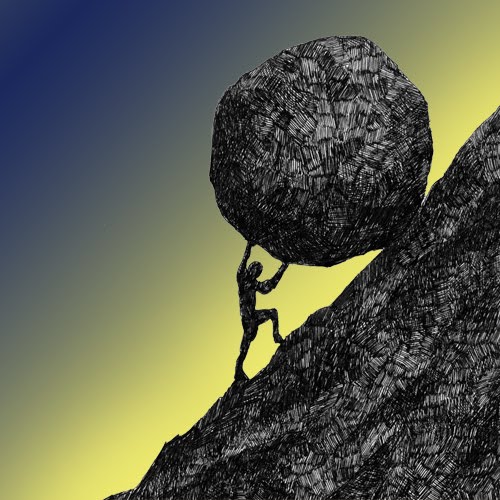
The demise of God also plays a major role in A Significant Life – Human Meaning in a Silent Universe by Todd May. But May goes deeper still into the problems we face in a secular universe. He begins at ground zero exemplified by Albert Camus for whom the universe is indeed silent. For Camus thoughts about meaning are ‘symptoms of the absurd’. Todd writes: “The absurd itself is something very precise. It is the confrontation of our need for meaning with the unwillingness of the universe to yield it to us.” Camus draws on the Myth of Sisyphus in his book of the same name to bring out this sense of the absurd while urging us to gain freedom by courageously acknowledging this unavoidable absurdity.

Sisyphus, who was condemned to repeat the same meaningless task for eternity.

May, however, is not finished with meaning and turns his attention to Aristotle for whom the flourishing of human life is an ongoing activity involving the commitment to be ‘intellectually engaged with the world’. But while May admires Aristotle he asks whether a life that is lived well and does good is also a meaningful one. Unlike Camus, for Aristotle the universe is not silent – rather it is a structured, ordered telos which humans can discover. And it is this telos, embedded in the universe, that provides Aristotle with his meaning. But as May points out – we are not Aristotle. The universe is not ‘ordered in such a way that everything has its telos’ and the cosmos is not for us a rational place’.

A rational universe? Maybe not.

So, attractive though Aristotle’s conception of the flourishing human life may be, it lacks the meaning that he sought.

And even if we accept the existence of God, that cannot help us as Socrates makes clear in the Platonic dialogue Euthyphro when he asks: “Is what is holy, holy because the gods approve it, or do they approve it because it is holy.” (This not the first time that this question has featured in this blog). Now, we have to assume that because God is considered to be good he has to conform to what is actually good. “God cannot ground the good because God answers to it,” writes May. And, further, there ‘must be something about the universe independent of God that offers human lives a sense of meaningfulness that God himself must answer to’. As we have seen, however, the idea that some sense of the good forms part of a rational universe does not hold water either.

Rejecting God and Aristotle, May sees if he can also reject Camus’s bleak prospectus – and he begins this task by shifting to Martela’s position of attempting to find meaning in life. His first venture is what he calls the ‘narrative approach’ in which ‘humans must take the resources they are given, develop them into a flourishing life and then sustain (or in the case of great misfortune, restore) that flourishing over the course of their personal histories’. This, of course, sounds a lot like Aristotle but without the rational universe. May also acknowledges that there is another problem with this approach because not all narratives provide meaning in the way that he hopes they will. He writes about the depressed life – and we might also point to narratives that are attenuated by poverty and those for whom the past is something people would rather forget. Another problem is that for some people, like the philosopher Galen Strawson (who has also featured in a previous article on this blog), their lives are not driven by narratives and their self-experience is more episodic than diachronic.

So, in the light of this, May’s next move is to write about what he calls ‘narrative values’ like steadfastness, intellectual curiosity, intensity, integrity and so on.

Is intellectual curiosity the answer?

It still looks as though we are drifting back towards an attenuated Aristotle here but May ploughs on: “In approaching life by way of narrative values then, we find that the meaningfulness does not lie in the narrative itself. Instead, we are asking whether that narrative is characterized by or expresses a theme that would give it value.” With reference to Strawson, he adds: “It might be that although Episodic, his life is nevertheless steadfast in its attention to a small range of important philosophical concerns.” It’s important to point out that May is not referring to moral values here because, obviously, the steadfastness of Eichmann in pursuing the Final Solution is rendered morally worthless. However, he does claim that both moral and narrative values do have the required degree of objectivity to mean something beyond the purely subjective, even if, at the same time, they are made up. As he argues that, because values are subject to reasoning they are not arbitrary. “If this is right, then we can say both that our values are made up and that they are, in an important way, objective,” he claims. To be sure, values operate within a tradition and network of practices.

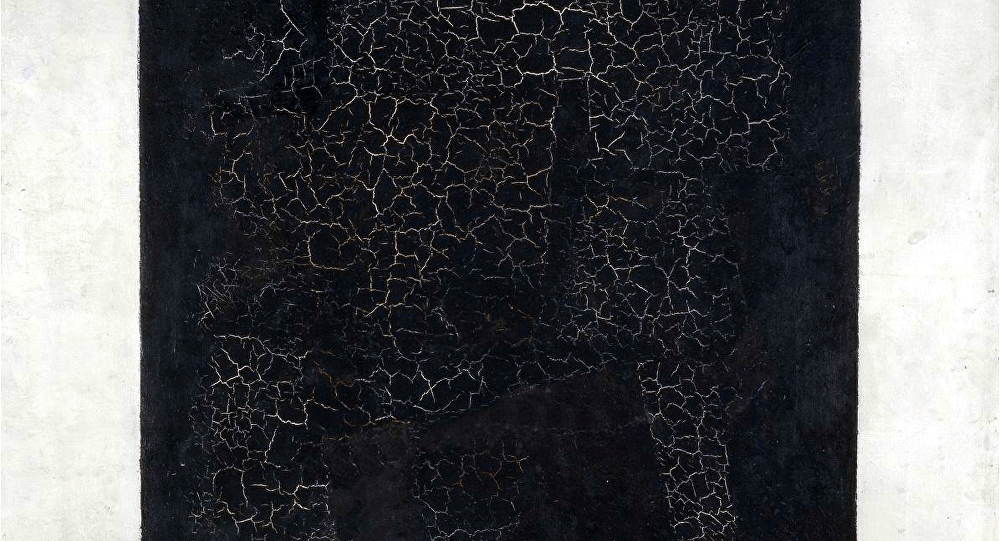
For May, our values are not ‘assured by the universe’ or in God, but nor or they product of blind whim. For some this might not be enough but for the rest of us, he writes ‘although this may not be all the objectivity we would like, perhaps it is the objectivity we need’. To use an analogy in the world of art, even Malevich’s famous Black Square contains within it traces of meaning, particularly when it is seen in the context of his life’s work.

Life in the void!

WE may often find ourselves in a sort of other world: that moment when we awake and momentarily are not sure where we are, or even who we are. Or perhaps one’s memory of a place does not match reality on a return visit. This may be, of course, that things have actually changed. But often it’s because our memories play tricks on us. Is there a space – a void – somewhere between perceptions? This a notion that occupies the maverick philosopher Slavoj Zizek in his Incontinence of the void in which he explores the spaces between philosophy, psychoanalysis and political economy. As he delves into the realm of pure thought he quotes Hegel thus: “The system of logic is the realm of shadows, the realm of simple essentialities freed from all sensuous concreteness. The study of this science, to dwell and labor in this shadowy realm, is the absolute culture and discipline of consciousness.”

And we are in shadowy world – but without the logic – in Beyond Philosophy by philosophers Nancy Tuana and Charles Scott as they peer at life beyond certainties ‘beyond formations, values, and meaning – and to the libertory power that attunements with beyond can occasion’. They want to ‘rattle the cages of our certainties’ and ask whether we can carry out our commitments ‘without the illusion of fixed certainty’. In doing so they explore the worlds of Nietzsche and his sense of ‘beyond good and evil’, Michael Foucault’s ‘unreason’ and Gloria Anzaldua’s Napantha – a liminal space ‘where you are not this or that but where you are changing’.

A liminal space

For Nietzsche, of course, it meant beyond ‘conformity, beyond those satisfied with their goodness, and beyond the evil created by their God. But not beyond the night sounds of the forest, the deep howls from the darkness’. For him it is the wildness of Dionysus that matters, not the cold, bloodless rationality of Apollo; the ‘joyful affirmation of life with its suffering and tragedies’ rather than the solace of life-denial. In part Nietzsche is valorising the noble warrior – the Ubermensch, although the authors wonder whether we can transfer our admiration to natural leaders or people who have an ‘exceptional energy to take charge’ over all those who are ‘low-minded, common and plebeian’, without losing Nietzsche’s dynamics.

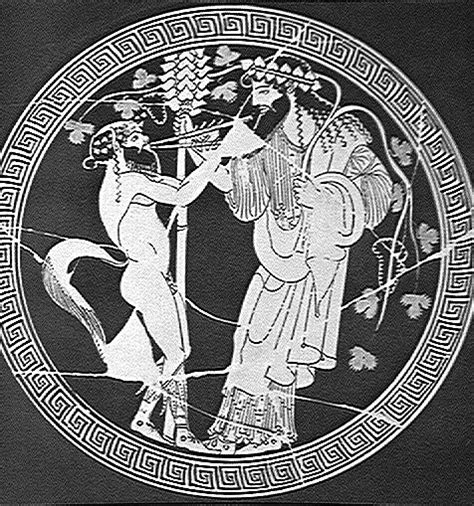
The wildness of Dionysus

Tuana and Scott also home in on Foucault’s concept of unreason, which can refer to any ‘event, state of mind, or manner or behaviour that is beyond reasonable sense or rational authority’. But it not opposed to reason – it’s just different from reason. The authors praise the anarchic freedom ‘which will find shelter in unreason’, which is freed from ‘normal decency’.

The deliberate destabilizing of Nietzsche and Foucault finds its apogee in the thought of Anzaldua who eschews reform in favour of transformations ‘which occur in this in-between space, an unstable, unpredictable, precarious, always-in-transition space lacking clear boundaries’. It’s a state she calls ‘dwelling in liminalities’. More than Nietzsche or Foucault Anzaldua links this state with ‘social, political action and lived experiences to generate subversive knowledge’.

One might be forgiven for feeling a tad queasy after all this but Tuana and Scott attempt to bring it all together with what they call ‘liberatory philosophy’: “We are speaking of profound experiential and social transformation out of which people come to think, feel, desire, and act in ways that were not previously possible.” They are looking not simply to make reforms ‘if that means taking the same forms and expanding them or rearranging them’ but to transform in the liminal spaces’. One of the problems that the authors readily acknowledge is the fear of getting lost in these spaces but their, perhaps not entirely satisfactory answer, is to embrace this fear and a ‘willingness to be undone’. Further: “We wish to influence shifts of habits, affective dispositions, and attunements so as to catalyze transformations in ways of living.”

Liberatory philosophy?

One obvious response to all this is how do you live your life in a world of such instability and uncertainty; how do you break out of the world of unreason, the ‘dwelling in liminalities’ in order to establish a firm foothold for social action sufficiently coherent to effect the transformation one seeks? For those of us already in a permanent liminal state, in which there is no indivisible individual only what might be called dividuals – a bundle of character traits and emotions – and for whom the daily task is to coral all these disparate forces into some sort of coherent action, Beyond Philosophy offers only paralysis. It seems at times as though the authors are guilty of importing their previously held positions – particularly about climate change – without demonstrating why you need to plunge into the depths of liminality to have them. Without some sort of intellectual grounding there doesn’t appear to be any ‘reason’ or bulwark against Trumpism, alternative facts and amoral chaos.

And their answer to concerns like these is: “Perhaps the question is rather: How do we desire to live in the world? Apathetically? Without passion even though passion intensifies peoples living experience?” One is tempted to respond to this by saying that there is already much passion in the world, perhaps too much, and, to misquote D’Alambert, if we get rid of logic and reason and ethics, we would still have plenty of passion and ‘we would have ignorance in addition’.

Back to Eternity!

Eternity

CULTURE wars and alternative facts have become the battleground of modern politics – or at least they have for some on the right of the political spectrum. It is often said that the problem with the Left is that it still thinks that political thinking is still about, well, politics, while the Right has shifted to culture. It’s not that they are simply on different sides – they are on different playing fields. We all know about the phenomenon of ‘alternative facts’ and the so-called ‘post-truth era’, but is this more than just a political strategy by the Right in order to gain power? According to Benjamin R. Teitelbaum there is much more.

Teitelbaum is a Professor of ethnography at the University of Colorado, but he is also an award-winning expert on the radical right. His new book War for Eternity focuses on an obscure philosophical movement called Traditionalism. It would probably have remained in obscurity had it not been adopted by people in real power, or at least those who have at one time or another attracted the attention of those in power – people like Steve Bannon and advisors to Putin and Bolsonaro. Teitelbaum has been studying Traditionalism for years and argues that it underpins the intellectual justification of much of the populist right, including Nigel Farage. According to Teitelbaum Traditionalists set themselves against modernity – that is, they are opposed to modern secularism, socialism – even capitalism – and universal values like human rights, all of which they see as illegitimate forces working to replace their preferred social, cultural and political hierarchies.

Teitelbaum writes: “Traditionalists follow Hinduism in believing that human history has always cycled through four distinct ages from a gold age to a silver to bronze and to the dark before moving back to gold and starting the cycle again.” Each age belongs to a particular type of person descending from a priestly or spiritual class (gold), down through warrior (silver), merchant (bronze) and, finally the slavery of the dark age.

The golden spiritual age

There are variations in the structure of this hierarchy but all Traditionalists believe that we are currently in the dark ages and, while Hinduism says that this cycle can take millions of years to complete, they believe that it can take place over a much shorter, human timescale. There is a a certain fatalism in all of this, of course, but Traditionalists believe that one can accelerate the decay of the dark ages in order to return to the golden age all the sooner. It is in this context that phrases like ‘creative destruction’ and ‘make America great again’ gain a new resonance.

One of Traditionalism’s leading thinkers is the Italian Julius Evola, who added a layer of cultural bigotry with ‘whiter, Aryan people constituting a historical ideal atop those with darker skins – Semites, Africans, and other non-Aryans’. Chillingly, he saw tyrants like Hitler and Mussolini as a kind of destructive ‘readjustment’. And Bannon saw Trump as a destructive force, hastening the end of the dark ages (the fact that Trump saw himself as a builder may have contributed to the rift between them).

Fundamentally, Traditionalists are opposed to the very idea of progress while cyclical time gives them the intellectual cover for this view because the concept ‘recognises no past, present, or future’.

The cycle of life

Teitelbaum writes: “Those attuned to cyclic time do not attempt to progress toward a a previously unrealized state of virtue, condemning the present and the past in the process.” Further: “The cycle also entails a motion from the central core, away to its edges, and back again – centripetal and centrifugal. It entails movement of departure from the illusion of time and progress, and movement of return back towards the core of eternal truth, on and on.”

Teitelbaum argues that one of the most disturbing aspects of Traditionalism – apart from questions about the truth of cyclic time as such and, in particular its Hindu manifestation- is not its cultural bigotry, which some adherents don’t agree with anyway, but the idea that we can never make progress. The fact that we no longer hang, draw or quarter people or legalize profit from enslaving people is irrelevant. What’s important is a return to the golden age of spirituality, even if that entails a return to barbaric practices and enslavement. Indeed, the very notion of slavery has been turned on its head so that we in our Western ‘modernity’ are not actually free but enslaved by materialism and consumerism. In fact, some of their concerns about what some call the psycho-politics of Big Data and neoliberalism does have some resonance . Those on the Left, however, are more likely to seek ways of countering the wilful ignorance that goes hand-in-hand with psycho-politics in an attempt to encourage more critically aware and engaged citizens; while Traditionalists are more likely to see psycho-politics as a welcome sign of the degeneration of the dark ages on the way to spiritual renewal.

For some this choice is no real choice at all because they will find nothing intellectually attractive about Traditionalism, but in so far as it is important to know how at least some quite influential people think, then Teitelbaum has done us all a favour.

Climb every mountain!

The mountain of truth

IN this world of alternative facts and relativism it’s comforting to know that there is a hilltop far away where the light of truth still flickers – if somewhat dimly. Indeed, towards the end of the 16th century the metaphor of the hilltop of truth was used by Francis Bacon – who was to become Lord High Chancellor in 1617 – to exalt the notion of Truth: “It is a pleasure to stand upon the shore and to see ships tost upon the Sea: A pleasure to stand in the window of a Castle, and to see a Battaile, and the Adventures thereof, below: But there is no pleasure comparable to the standing upon the vantage ground of Truth: (A hill not to be commanded, and where the Ayre is alwaies cleare and serene;) And to see the Errours, and Wanderings, and Mists, and Tempests, in the vale below:”. (By the the way, spellcheck had a field day in that section!).

But this beautiful description of Truth – almost equating it with beauty – has been seriously undermined by what might be called postmodern epistemic relativism and, as Ophelia Benson and Jeremy Stangroom put it in Why Truth Matters, attacks on the ‘canons of coherence, logic, rationality and relevance – which are reminiscent…of counter-enlightenment and reaction’. We can see the results in the shameless lies and, at best, dissembling of the Trumps, Johnsons and Cummings of this world. It should be added that a common tactic of the post-truth brigade is to misrepresent the Enlightenment as privileging reason over everything else and in so doing attempting to eliminate mystery from the world.

The Enlightenment

However, as D’Alambert wrote in response to Rousseau’s contempt for Enlightenment rationality: “In sum, even assuming that we might be ready to yield a point about the disadvantage of human knowledge, which is far from our intention here, we are even farther from believing that anything would be gained by destroying it. Vices would remain with us, and we would have ignorance in addition.” Without an appeal to truth and reason he who shouts loudest wins, so we are ill-advised to deliberately try to undermine reason and respect for truth-seeking because, ultimately, these are the only tools we have against the tyranny of ignorance.

It is easy to despair sometimes in the face of the constant flow of almost wilful ignorance, the siren calls of the tech giants and the effluvial stream of postmodern irony – but there are still beacons of hope out there, standing atop the mountain. The economist Tim Harford is one such beacon and his popular Radio 4 programme More or Less is a paean to Truth, attracting a loyal following. And his book How to Make the World Add Up – which was Book of the Week on Radio 4 towards the end of last year – is an appeal to the sort of rationality that is despised by people like Trump with their ‘alternative facts’.

In this book Harford provides 10 rules to deploy when we are trying to navigate our way through the dense thickets of statistics, and the first is to search your feelings. He writes: “Our emotions are powerful. We can’t make them vanish, and nor should we want to. But we can, and should, try to notice when they are clouding our judgement.”

Or emotions are powerful and we should be wary of them when they cloud our judgement

Other chapters take us through issues like the importance of taking our own experiences into account, as well as the statistics , because both can be true; avoiding jumping to conclusions too quickly; attempting to put statistics into a wider context; checking to see if there is any information missing; demanding transparency; not taking statistical bedrock for granted; and keeping an open mind. But his golden rule, if all else fails or is forgotten, is to ‘be curious’. Curiosity may be the cure for boredom and, as Harford writes, makes us ‘burn with the desire to know more.

Building with statistics

Once we have donned the crampons of Harford’s rules, we can begin to climb Bacon’s hilltop of Truth but what about the muddy waters of ethics? A moment’s thought, however, demonstrates that the ‘canons of cohesion, logic, rationality and relevance’ must also surely apply to ethics, even if our conclusions might be less firm than in in the realms of statistics and science. As Alasdair MacIntyre notes in The Nature of the Virtues even a ‘relatively coherent tradition of thought’ does not necessarily produce any real ‘unity of concept’. On the other hand not all is lost because he is able to come up with three conditions that would have to be met – and potentially found – for the ‘concept of virtue to be made intelligible’. He adds: “The first stage requires a background account of what I shall call a practice, the second an account of the narrative order of a single human life, and the third an account of what constitutes a moral tradition.” Thus, although we haven’t come to any conclusions, Macintyre does provide a ‘coherent, logical, rational and relevant’ framework within which we may be able to make progress.

And indeed progress has been made in other areas of moral theory. For example, Act Utilitarianism focuses purely on those acts which are likely to generate the greatest happiness of the greatest number. Deontology, on the other hand, is usually thought to eschew consequentialism because of the odd conclusions that the latter can, sometimes, throw up. The development of Rule Utilitarianism, however, is an attempt to reduce some of these uncomfortable conclusions while moving closer to Deontology, while some advocates of the latter do acknowledge that it does take some account of consequences.

As we have seen, the search of truth and reason in the uplands is far from dead – but it requires effort, something that the psychopolitics examined in a previous blog tends to undermine as Big Data and neoliberalism seek to turn us all into gibbering infantilized consumers. But surely it is worth the climb – even if we only get as far as the foothills.

How to escape the caged Self

“To teach how to live without certainty, and yet without being paralysed by hesitation, is perhaps the chief thing that philosophy, in our age, can still do for those who study it.” So wrote Bertrand Russell in his History of Western Philosophy in 1946. For Russell philosophy itself dwelt in the uncertain, uncomfortable position between the certain dogmas of theology and the relatively firm empirical ground of science. It may seem odd to write about uncertainty at a time when we seem to be more certain of our political and moral beliefs than ever. One is either a Brexiteer or a Remainer, a pro-lifer or pro-choicer, and individualist or a communitarian and so on and on – and ne’er the twain shall meet. And yet there is also a sense in which this apparent certainty is a cover for a deep-rooted uncertainty without having the inconvenience of having to think too much.

Bertrand Russell

Even Russell wasn’t immune from diving for cover in the form of Descartes’s homunculus or, as Gilbert Ryle put it derogatively his Concept of Mind the ‘ghost in the machine’. In The Problems of Philosophy Russell wrote: “Ultimately one has to come down to a sheer assertion that one does know this or that – eg one’s own existence.” And according to Mary Midgley in her remarkable book Wisdom, Information and Wonder this was the method recommended by Descartes. “Russell’s faith in this approach never faltered, however, and he regarded philosophers who moved away from it with a certain mystified disgust,” writes Mary Midgley, who was one of the quartet of great female philosophers along with Iris Murdoch, Philippa Foot and Elizabeth Anscombe. Rather than questioning everything, as he claimed he was doing, Russell ‘sat very firmly on a particular set of assumptions which dictated just what he was and was not going to question, and which determined also the form of the question’.

Mary Midgley

For Midgley our society has been captured by this solipsistic notion that there is an entity trapped inside a metaphysical cage and from which we have to find a way of escaping. For Descartes and Bishop Berkeley the escape was provided by God. For Kant it was us who effectively created the objective manifold around us – and any knowledge of the world-in-itself was for ever beyond our ken. Meanwhile Schopenhauer, following on from Kant, opened his magnum opus The World as Will and Representation with the words: “The world is my representation.”

Rene Descartes meditates

In his epigrammatic work Tractatus logico-philosophicus Wittgenstein took a similar position. But by the time of his Philosophical Investigations he had completely flipped, acknowledging that we could not have had a concept of the Self in the first place unless we already thought of it as part of the outside world – thus, in one bound, escaping solipsism. And, as Midgley writes: “Certainly, too, we would have no language to speak of it (the world) if we did not conceive those others as able to communicate like ourselves, and living in a public world which could be communicated about.” Further, Descartes’s ‘I think, therefore I am’ is not ‘basic at all. It could not be because it is expressed in language’. And as Prof Raymond Tallis – who has endorsed the work of Salisbury Democracy Alliance (SDA) – writes in the latest edition of Philosophy Now: “When I tell you that no-one exists apart from myself, this is not a logical contradiction – rather, the very act of my asserting it to you makes sense only if what I assert is untrue.”

Prof Raymond Tallis

Meanwhile, in a passionate plea for for communitarianism and against the bleak solitude of the caged Self, Midgley writes: “From the deepest roots of our experience, we are social beings directly inhabiting the world, members of a community and of a species whose faculties have all evolved to fit them for a wide physical and social context, not solitary astronauts.”

And in a section that has particular relevance to today’s divisions, tribal thinking and social media echo chambers, she writes: “Moving away from Cartesianism, we may suggest that theoretical disputes as well as practical ones are best settled, not from on high, but by peaceful negotiation between the parties involved, with background help and advice from outside observers.” It’s a sentiment that could be set as a preamble for the justification of Citizens’ Assemblies, for which SDA is campaigning.